
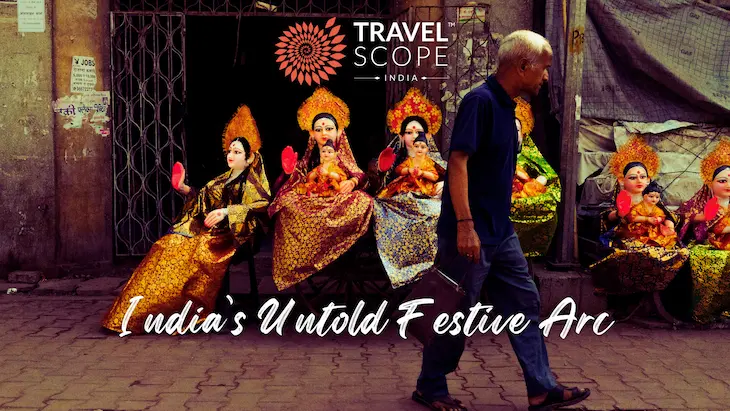
Most travellers time their journey to India in October or November. The skies are clear, the festivals in India are in full swing, and every photograph looks like it’s been lit by the gods themselves. Brochures talk about Diwali in Varanasi, palaces glowing under autumn light, Diwali diyas lining ancient ghats, and rituals that dazzle as much as they mystify. And while none of this is untrue, there is something quietly magnificent that happens earlier – just as the monsoon season in India begins to loosen its hold, the country prepares to step into a long, uninterrupted arc of festival calendar from August to December.
August doesn’t arrive with fanfare. It arrives with rain. After the exhausting heat of summer, the first showers bring with them the scent of wet earth, the shimmer of fresh green on trees, and a sense that something sacred has been set in motion. It is during this time that the festive season truly begins – not with fireworks, but with a thread.
Festivals to Experience in India in 2026
India’s festival calendar changes considerably from one region to another. Some celebrations follow fixed dates, while many are determined by lunar calendars. For travellers planning India in 2026, these are some of the celebrations worth considering when deciding where and when to travel.
| Date | Festival | Where to experience it |
|---|---|---|
| 14 January 2026 | Makar Sankranti | Gujarat and Rajasthan |
| 15 January 2026 | Pongal | Tamil Nadu |
| 4 March 2026 | Holi | Rajasthan, Uttar Pradesh and across North India |
| 24–25 June 2026 | Hemis Festival | Hemis, Ladakh |
| 26 August 2026 | Onam | Kerala |
| 14 September 2026 | Ganesh Chaturthi | Maharashtra, particularly Mumbai and Pune |
| 16–20 October 2026 | Durga Puja | Kolkata |
| 8 November 2026 | Diwali | Across India |
Many Indian festivals follow lunar calendars, so dates change each year. For major celebrations, it is worth planning accommodation and routing well in advance.
1. A Season That Begins With a Thread: Raksha Bandhan
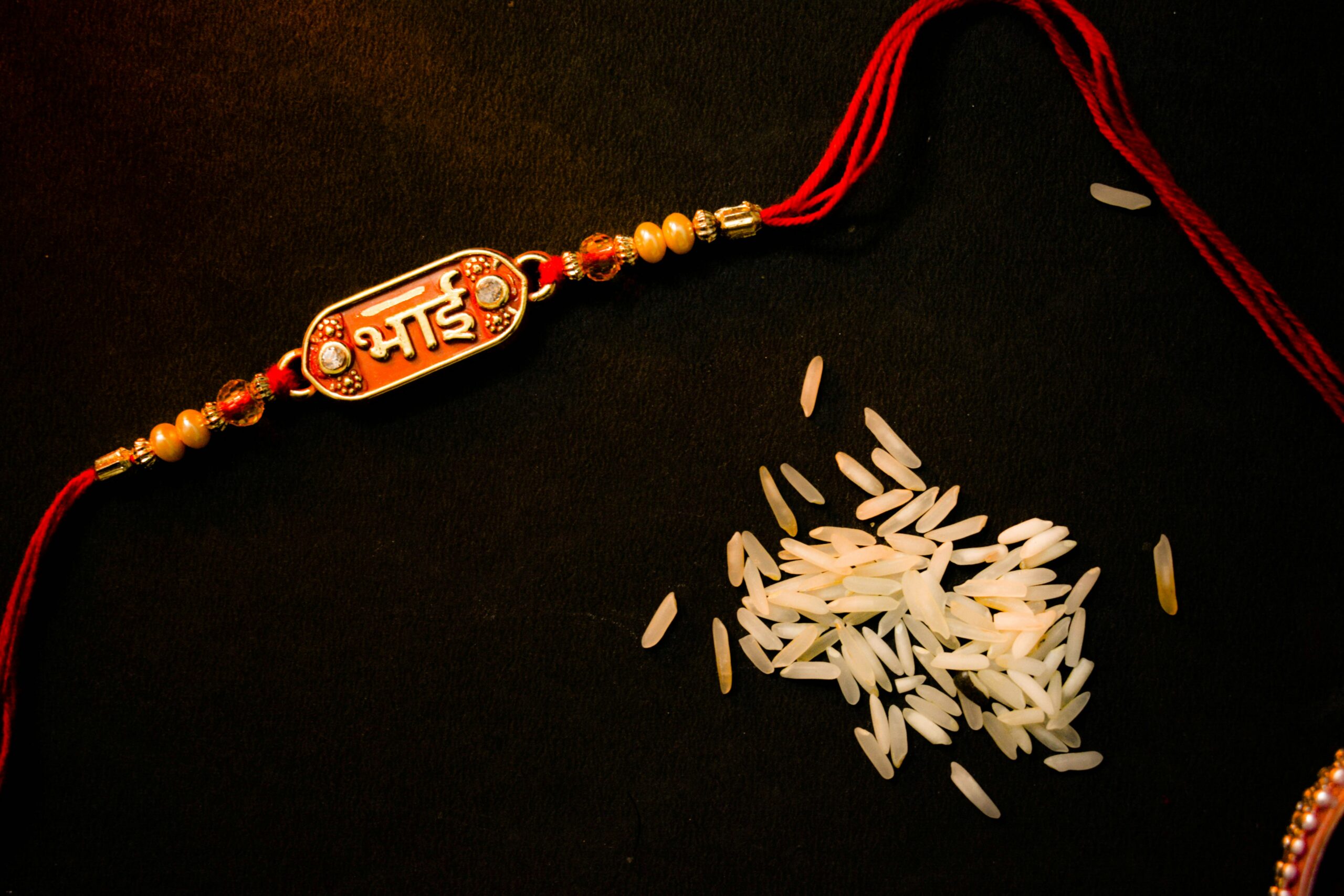
Raksha Bandhan festival is among the first in India’s long festive arc. It is quiet, intimate, rooted not in spectacle but in relationships. A simple thread – a rakhi – tied by a sister on her brother’s wrist, symbolizing not just protection, but remembrance, gratitude, and the eternal bond of saubhagya (well-being). There is no loud music, no public procession. Only the rustle of silk sarees, the scent of homemade sweets like kheer and laddoos, and the clink of silver thalis prepared with turmeric, vermillion, rice grains, and a diya lit with ghee. The rituals unfold gently – an aarti, a mark of tilak on the brother’s forehead, a rakhi tied, and blessings exchanged in silence more than words.
In Rajasthan cities like Jaipur,Jaipur, Udaipur, Jodhpur, artisans craft rakhis in the old way with colourful threads, delicate beadwork and tiny mirrors borrowed from local embroidery traditions. Though Raksha Bandhan began as a festival between sister and brother, its meaning has grown wider. Today, rakhis are tied to soldiers in gratitude and even to trees in a pledge to guard the earth. Myth tells of the river goddess Yamuna tying a thread to Yama, the god of death, sealing an eternal bond. In the ritual, roli and akshat, symbols of protection and prosperity, give each thread a quiet sanctity. These stories are rarely spoken; they live in gestures: folded hands, a shared meal, a handmade rakhi patiently woven over hours or days. In that single thread rests a bond not easily broken, a bond that carries time, tradition and tenderness all at once.
When: 28 August 2026
Where: Rajasthan and across North India
Why travel for it: family rituals, handmade rakhis, traditional sweets and a more intimate view of Indian festival culture.
How to include it in a journey:
The festival can add context to a Rajasthan or North India itinerary without requiring major changes to the route.
2. Then Comes the Cowboy God: Janmashtami
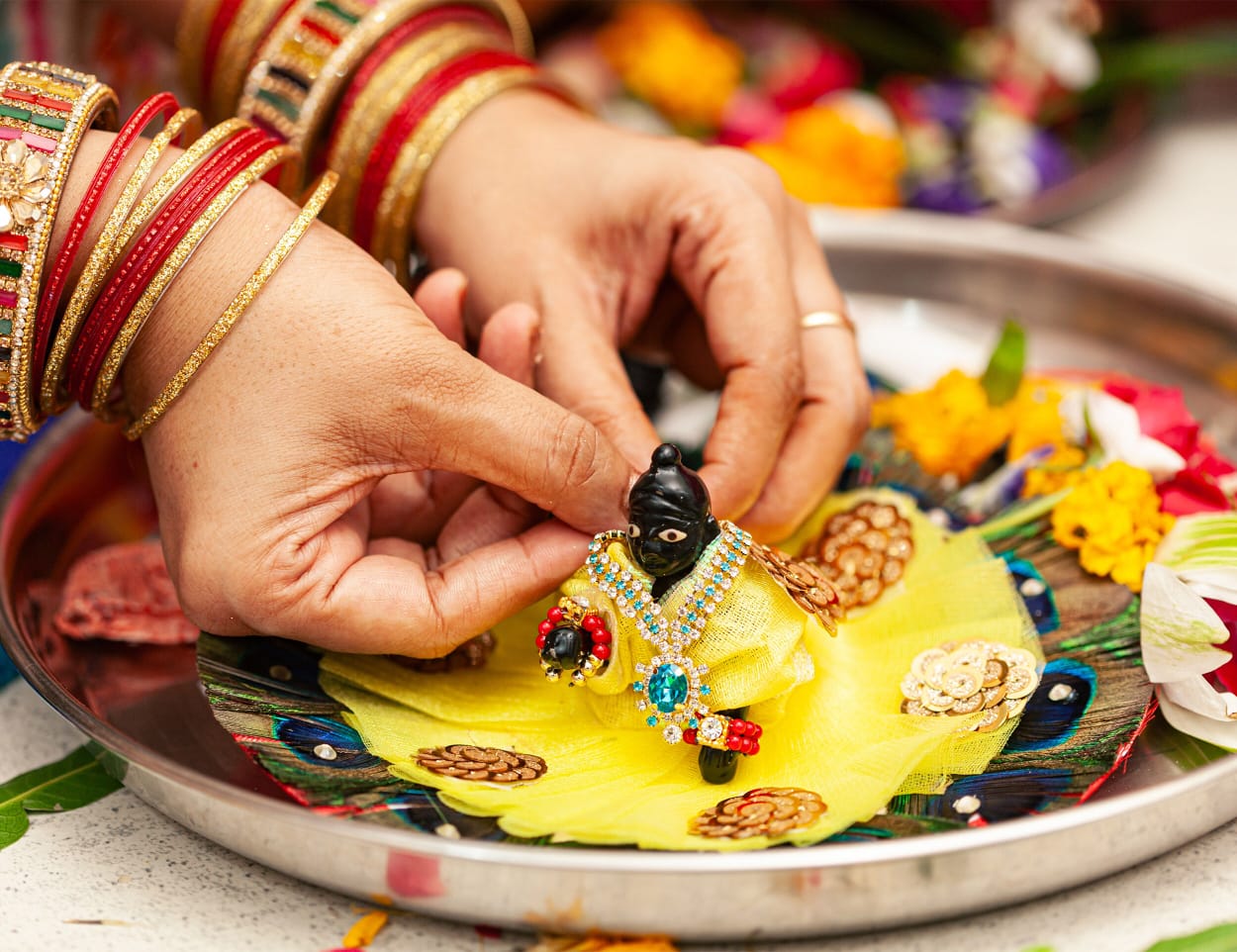
Soon after arrives Janmashtami – the midnight celebration of Lord Krishna’s birth. In temples and homes, the air fills with bhajans, the soft notes of the flute, and the gentle creak of swings carrying idols of Laddu Gopal. Devotees fast through the day, breaking it only after the midnight aarti, when conches blow and bells announce the birth of the divine child.
Children dress as Krishna and Radha, their innocence echoing age-old tales. In Mathura and Vrindavan in Uttar Pradesh, the Braj region erupts with Raslila dance-drama performances – dramatic retellings of Krishna’s life through folk music, chant, and dance. In Maharashtra, the famous Dahi Handi festival in Mumbai and Pune recreates Krishna’s playful love for butter. Wherever it’s observed, Janmashtami is more than a festival. Across temples and homes, devotees fast, sing Krishna bhajans, and sway Laddu Gopal idols in decorated swings. It’s a gathering of hearts – not as an audience, but as storytellers, devotees, and keepers of a living tradition.
For travellers seeking to witness these vibrant celebrations, let us design a curated journey around Janmashtami.
When: 4 September 2026
Where: Mathura and Vrindavan, Uttar Pradesh
Why travel for it: temple celebrations, Raslila performances, devotional music and midnight rituals marking the birth of Krishna.
How to include it in a journey:
Mathura and Vrindavan can be incorporated between Delhi and Agra, making the festival particularly accessible within a North India itinerary.
3. Of Clay and Crowds: Ganesh Chaturthi
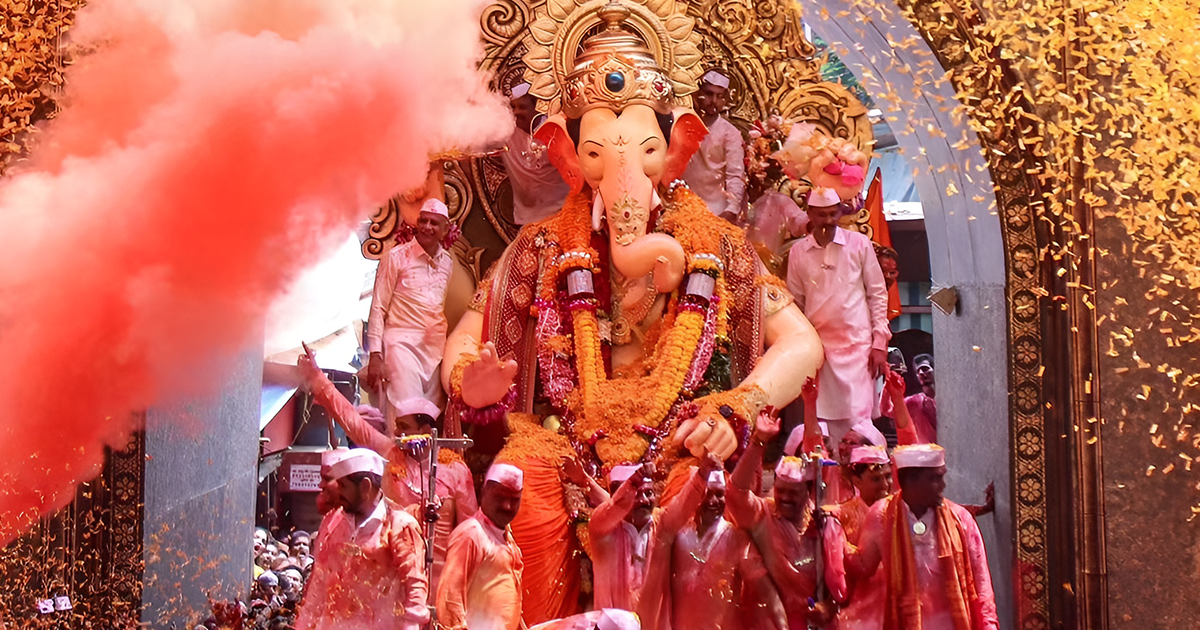
By the time September arrives, Ganesh Chaturthi sweeps across India, draping cities and villages in saffron, marigold and the scent of incense. In Maharashtra, especially Mumbai and Pune, the festival unfolds with unmatched grandeur. Several months before the celebrations, in the coastal town of Pen in Raigad district, artisans begin shaping towering idols, none more famous than Mumbai’s Lalbaugcha Raja, where millions queue for a glimpse of the beloved elephant headed god. Streets throb with dhol-tasha processions and lezim beats as chants of “Ganpati Bappa Morya” rise through clouds of gulaal. Homes are adorned with mango leaves and rangoli, while modaks and karanjis fill the air with the fragrance of jaggery and coconut.
Yet alongside the spectacle, a quieter and greener rhythm is taking root. Across Konkan villages and temple towns in Goa and Karnataka, families are turning to small eco-friendly Ganesh idols made of unbaked river clay or red earth, often decorated with local flowers and leaves. In cities too, some devotees welcome idols crafted from turmeric, tulsi seeds or even papier mâché that dissolve quickly, leaving no trace in the water. Immersions here take place not in the sea but in local ponds, tanks or artificial immersion pools, allowing the clay to return to the earth without harming rivers or marine life. This coexistence between grandeur and grace, tradition and responsibility is what gives Ganesh Chaturthi its rare and resonant texture.
Want to join one of these vivid processions in person? Let us carefully design your Ganesh Chaturthi experiences.
When: 14 September 2026
Where: Mumbai and Pune, Maharashtra
Why travel for it: community pandals, artisan-made idols, neighbourhood celebrations and large ceremonial processions.
What international travellers should know:
The final immersion days can bring major crowds and road closures. If comfort and access are priorities, earlier days in the festival period are often easier to manage.
How to include it in a journey:
It works naturally at the beginning or end of a Maharashtra itinerary, particularly for travellers already spending time in Mumbai.
4. In the South, A King Returns: Onam
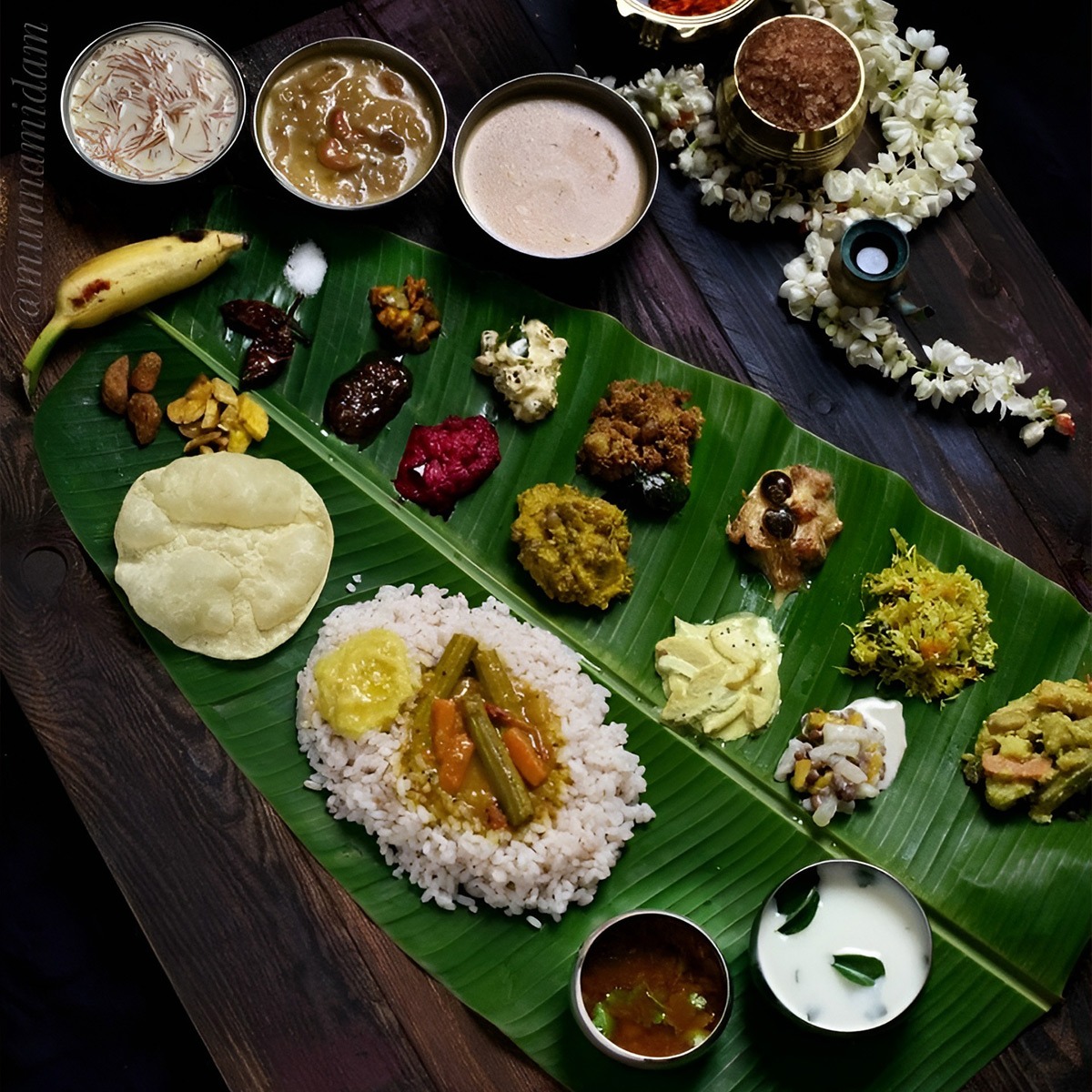
And then, as the monsoon begins to retreat, Kerala welcomes the Onam festival – quietly, gracefully. It is a festival of details, not display. The scent of jasmine in braided hair, the soft glow of brass lamps at twilight, and onasadya feasts served on banana leaves, each dish placed with care, each flavour tied to memory. Every morning, families create Onam pookalam floral designs – floral carpets crafted from fresh petals, each pattern welcoming the spirit of King Mahabali, the beloved ruler who is said to return during Onam. He represents a time when justice, prosperity, and equality flourished, a golden age remembered not in sermons, but in practice.
Children hear his story not from stages, but from grandparents, from murals, from folk songs. There are no loudspeakers here. Just the rhythm of the Vallam Kali boat races slicing through backwaters. Just memory, preserved in rituals, recipes, and homes scented with sandalwood and coconut oil. Onam doesn’t demand attention. It invites reflection – and in that lies its quiet splendour.
To taste the tradition firsthand, you can discover our curated Onam celebrations and experiences.
When: 26 August 2026
Where: Kerala
Why travel for it: Onam sadya feasts, pookalam flower arrangements, boat races and regional traditions associated with King Mahabali.
How to include it in a journey:
Onam can work well within a Kerala itinerary combining Kochi, the backwaters and the hill country. Travellers should allow additional time for local movements during major celebrations.
5. In the East, it’s a homecoming – of a warrior and a daughter: Durga Puja
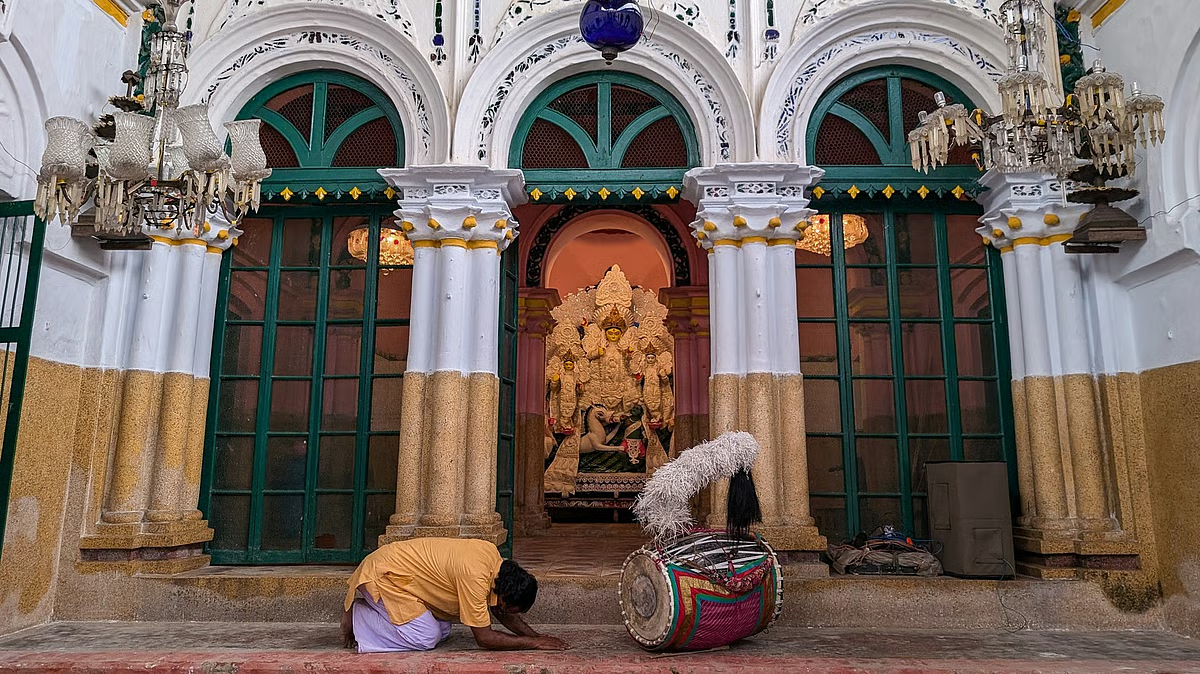
By October, Durga arrives. Not just as a goddess of strength, but as a symbol of maternal protection, artistry, and cultural unity. In Kolkata, the city transforms into a slow crescendo of sound, colour, and scent begins weeks before the festival itself. In the serpentine alleys of Kumartuli, potters – many from families who’ve sculpted for generations mould the goddess from Ganga clay mixed with a ritual handful of soil from a sex worker’s doorstep, symbolizing inclusion of all forms of womanhood. On a day called Mahalaya, the grand arrival, a ritual known as chokkhu daan takes place. In the stillness before dawn, her eyes are painted in a sacred moment, breathing life into the idol. It is the moment when Devi Paksha, the hour of the goddess, begins, and Pitri Paksha, the fortnight of the ancestors, draws to a close. During Pitri Paksha, families offer tarpan – holy water from the Ganga, in prayer and gratitude to forefathers and all departed kin, seeking their blessings before the goddess descends.
As the five days of pujo unfold – Shashti to Dashami – streets transform into open-air galleries. Pandals rise as installations – not just of devotion, but of deep storytelling. Last year, one pandal explored the concept of Bihin – the Void. A space stripped bare, where the goddess was absent – inviting reflection on loss, silence, and the formless divine. Another, titled Bari Bindu, created a unique raindrop-themed experience. The pandal used falling water droplets striking metal utensils to mimic the deep, rhythmic beat of the traditional dhaak. This poetic blend of water and sound honoured the power of vibration. These aren’t decorations but temporal museums, where art meets devotion and stories breathe on borrowed time, earning Durga Puja its place as UNESCO-recognised intangible heritage.
The city doesn’t sleep: the dhaak drums pulse in your chest, dhunuchi dancers whirl in smoke and devotion, and every ritual – pushpanjali, sandhi puja, sindoor khela – plays out like a well-rehearsed memory. Every ritual is old, yet every year it feels new. Not because anything changes, but because the emotion never dulls. Because Durga doesn’t just visit – she returns home, to her maternal house, to a city that waits all year to feel whole again.
For those moved by artistry and devotion, join the Dussehra celebrations in Kolkata through our curated journeys.
When: 16–20 October 2026
Where: Kolkata, West Bengal
Why travel for it: neighbourhood pandals, artisan-led installations, food traditions and city-wide celebrations.
What international travellers should know:
The scale of Durga Puja can be overwhelming without planning. The experience is much better when neighbourhoods and timings are selected in advance instead of attempting to cover the city indiscriminately.
How to include it in a journey:
Allow at least three nights in Kolkata. The city can then connect naturally with Northeast India, the Himalayas or onward journeys to Rajasthan and central India.
6. When the World Looks In: Diwali
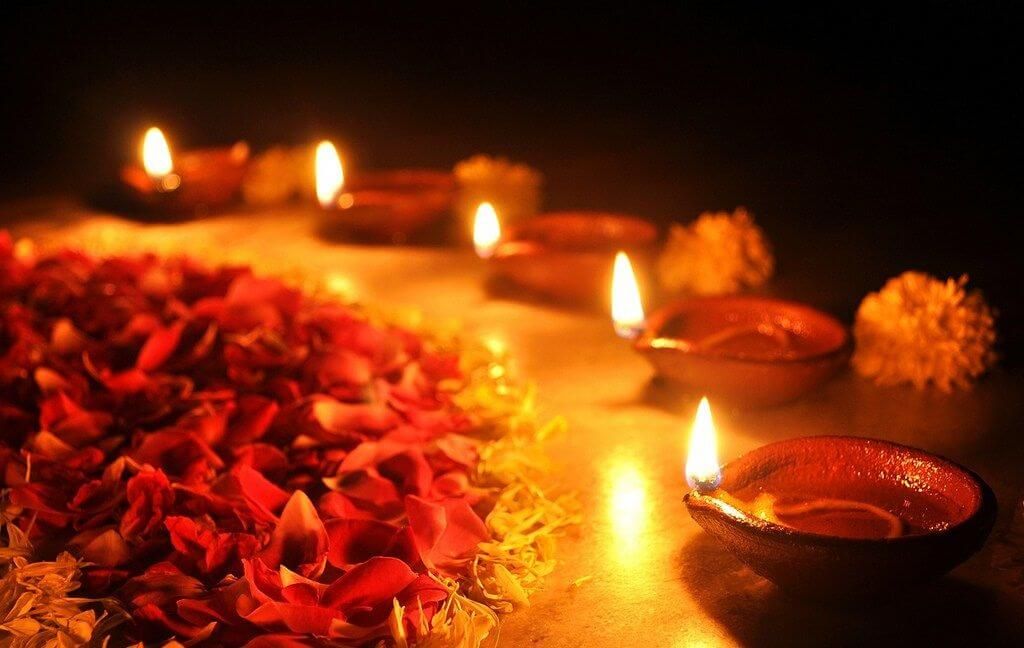
By November, Diwali sweeps across India like a tide of light. It’s the festival many travellers wait for – and rightly so. Cities shimmer under fairy lights, courtyards come alive with marigold blooms, and doorsteps flicker with rows of clay diyas, their flames swaying in the dusk breeze. The air is thick with the scent of cardamom-laced laddoos, camphor from morning pujas, and jasmine tucked behind ears. In Jaipur’s old city, markets spill over with coloured powder and silver trinkets, while Delhi’s rooftops erupt in bursts of firecrackers that light up the smoggy sky like a thousand fleeting suns.
Yet beyond the spectacle, Diwali also carries a quieter pulse – best felt in places like Varanasi or Maheshwar. In Maheshwar, the ghats fall into a soft hush as women light oil lamps and set them afloat on the Narmada, each flame a silent prayer. The Ahilya Fort above glows gently in candlelight, and somewhere, under an old archway, a veena hums its way into the night. In Varanasi, the Ganga Aarti becomes a riverborne offering of rhythm, fire, and breath, a meditation in motion.
Because Diwali is not only about outer brilliance. It is about inner illumination. Light that steadies, not blinds. In the space between noise and stillness, ritual and revelry, one remembers: the deepest lamps are the ones we light within.
To witness the Festival of Lights in its most authentic settings, explore our curated Diwali journeys.
When: 8 November 2026
Where: Varanasi, Jaipur and across India
Why travel for it: illuminated ghats, decorated markets, household rituals, temple ceremonies and evening celebrations.
What international travellers should know:
Transport, opening hours and restaurant operations can be affected on the main festival day. Air quality can also deteriorate in some cities during the Diwali period.
How to include it in a journey:
The destination matters. Varanasi works well within a North India route, while Jaipur can form part of a broader Rajasthan journey.
What comes after Diwali?
India’s festival calendar continues well beyond Diwali. Depending on the year and region, celebrations such as Bhai Dooj, Chhath Puja, Guru Nanak Gurpurab and a number of regional fairs follow during the weeks afterwards. For travellers, this means the festive season does not end with Diwali, particularly across northern and eastern India.
7. The Final Note: Christmas in the Tropics
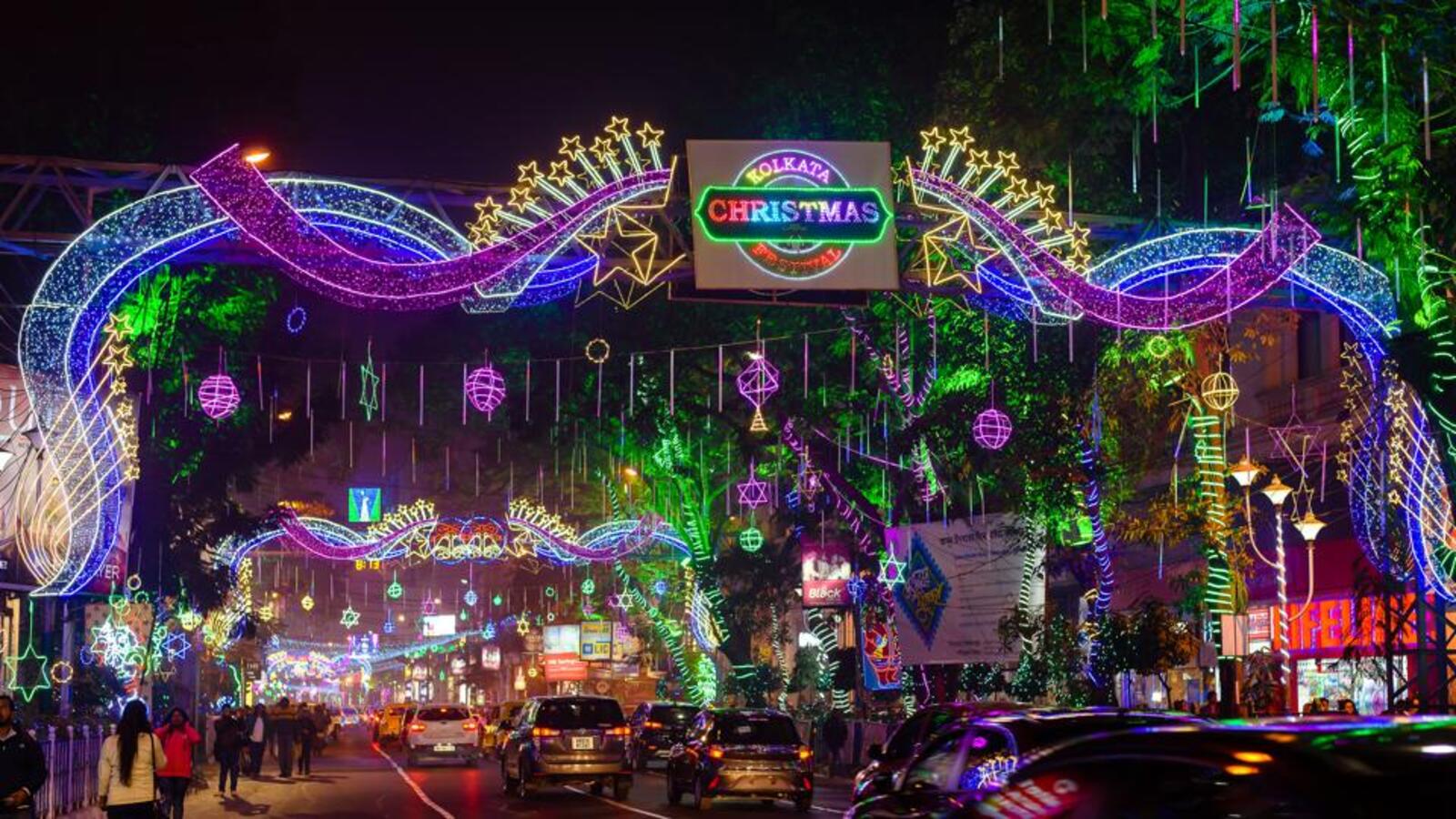
And just when it feels like the festive arc has drawn to a close, December arrives with its own kind of magic, a gentle final act. Christmas in India doesn’t bring snowdrifts or pine forests, but it wraps the country in a warmth of a different kind. In the old quarters of Goa, Kochi, Kolkata, and Shillong, stars made of bamboo and coloured paper glow above rooftops, and narrow lanes come alive with light. Carolers weave through the streets, their voices rising in Konkani, Tamil, Malayalam, English, a chorus stitched from centuries of devotion.
In Kolkata, Nahoum’s bakery draws long queues for rich fruitcakes, while in Pune, Kayani’s shelves overflow with almond-studded confections. Across the country, family kitchens bring out heirloom cake tins, churches open their doors for midnight mass, and bells echo through sea breeze and mountain mist alike. This is Christmas in India – not imported, but made anew. Rooted in history, wrapped in warmth, and carried forward by faith and community.
When: 25 December 2026
Where: Goa, Kochi, Kolkata and Shillong
Why travel for it: historic churches, midnight mass, local baking traditions, illuminated neighbourhoods and regional Christian heritage.
What international travellers should know:
Christmas is celebrated very differently across India. Goa, Kochi, Kolkata and Shillong each have their own character, and popular churches, central streets and festive districts can become busy on Christmas Eve and Christmas Day. Hotel demand can also rise in destinations such as Goa during the holiday period.
How to include it in a journey:
Christmas can fit naturally into a winter itinerary. Goa can be combined with Mumbai or Karnataka, Kochi with a wider Kerala journey, Kolkata with eastern or Northeast India, and Shillong with a broader Assam and Meghalaya route.
Why This Arc Matters
Many come to India seeking “the experience.” But experience here is not entertainment. It is an emotion. What makes this entire arc – from August to December – so special is not just the diversity of celebrations, but the spirit that runs through all of them. These aren’t festivals that perform for attention. They exist because people believe, remember, and participate. This is not the India of bucket lists. It’s when India is most open, this is the India of rhythm and ritual. Of seasons marked not just by weather, but by gods returning home, by families gathering, by artisans creating with their hands and hearts. When priests tell stories not as guides, but as keepers.
And for those who choose to travel during this time, what awaits is not a spectacle but a kind of invitation. To sit quietly during a puja. To eat with a family during a feast. To watch a sculptor shape a story in clay. To listen – not just with the ears, but with the whole self.
At Travel Scope India ,our journeys during these months are crafted with care, because it’s a season that speaks. We don’t sell tours. We curate memories. We help you find moments – a diya on a river, a thread around a wrist, a story shared at dusk – that stay with you long after the flight home.
So, if you’ve seen India in her brightness, try seeing her in her stillness. When the rains have just passed. When the gods have just returned. When the land still drips with devotion.
Planning an India Journey Around a Festival
-
Book earlier than usual.
Hotels and flights can fill quickly around major festivals. -
Allow additional transfer time.
Road closures, processions and local traffic can affect journey times. -
Choose the right day of the festival.
The largest procession or final celebration is not always the best day for every traveller. -
Build in recovery time.
A major festival can be intense, especially in large cities. A lighter day afterwards can improve the overall pacing. -
Work with local context.
Many of the best experiences happen at neighbourhood level, where knowing which area to visit and when can completely change the experience.
So Why Travel in This Season?
For the Traveller who has outgrown “top 10s”, seeks warmth, not just weather.
Who wants to see India through her slow, sacred rhythm…. this is your season.
It begins not with a monument.
But with a thread.
And a song.
And the sound of rain on stone.
Every celebration is a story waiting to be lived. Let us design your festive journey with care – Contact Travel Scope to begin.
FAQ
Q1. When is the best time to visit India for festivals beyond Diwali?
August to December. You’ll witness Raksha Bandhan, Janmashtami, Ganesh Chaturthi, Onam, Durga Puja, Diwali, and Christmas. Avoid peak tourist circuits right after Diwali – Delhi, Agra, Jaipur get crowded and expensive. Opt instead for Varanasi, Kerala, Kolkata, or Goa during festivals.
Q2. Can travellers participate in Indian festivals, or are they only for locals?
Yes , warmly. Join an Onam feast in Kerala, share bhog at a Durga Puja pandal, or float a diya at Varanasi’s Ganga Aarti. Avoid intrusive photography during private rituals or pushing through temple crowds; it can feel disrespectful.
Q3. Which Indian festival is most visually spectacular for photography?
Durga Puja in Kolkata for immersive artistry, Diwali in Varanasi for rivers of light, and Ganesh Chaturthi in Mumbai for colour and energy. Avoid massive visarjan (immersion) crowds in Mumbai if you dislike noise or tight spaces – smaller community idols are more accessible.
Q4. Are there eco-conscious or sustainable ways to experience Indian festivals?
Yes. Look for eco-friendly Ganesh idols (clay, turmeric, paper pulp), Onam floral carpets made with seasonal flowers, and handmade décor by artisans. Avoid buying cheap plastic souvenirs or mass-produced idols, as they often harm rivers and landfills.
Q5. If I can only attend one festival during this arc, which should I choose?
For intimacy: Raksha Bandhan in Rajasthan.
For storytelling: Janmashtami in Mathura.
For feasting: Onam in Kerala.
For art: Durga Puja in Kolkata.
For light: Diwali in Varanasi.
If you want one unforgettable, globally recognised cultural immersion, Durga Puja in Kolkata is unmatched, a citywide celebration recognised by UNESCO.

