
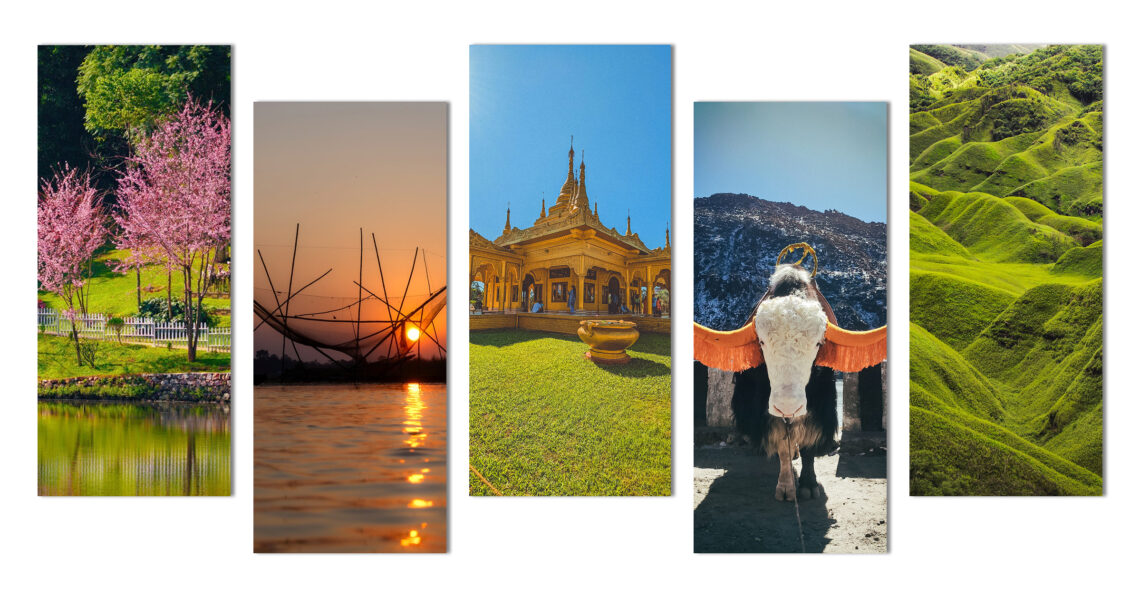
Somewhere past Siliguri in West Bengal, the map of India narrows into a corridor barely twenty kilometres wide, and on the other side of it, the country changes its grammar. The hills speak in dialects that never touched Sanskrit. The food leans on fermentation and smoke instead of masala, a combination of spices. The churches outnumber the temples in three states, and the monasteries outnumber both in a fourth. For a long time, Northeast India occupied an uncertain place in the travel imagination. It appeared in conversations about wildlife, the Hornbill Festival or perhaps a long-planned journey to Sikkim, but rarely as part of the first idea of India presented to an international traveller.
Northeast India, consists of 8 states: Arunachal Pradesh, Assam, Manipur, Meghalaya, Mizoram, Nagaland, Sikkim and Tripura, connected by geography yet remarkably distinct in language, faith, script, cuisine, dress and cultural identity. Their relationships with modern India have followed very different paths, from former kingdoms and colonial-era provinces to territories that became states of the Indian Union, decades after our Independence. Across the region, however, runs a strong consciousness of identity and an enduring desire to preserve it. That complexity is central to understanding Northeast India, and it is where this guide begins, before the waterfalls, monasteries and tea gardens enter the picture.
This is also, increasingly, a region worth telling that story to a very particular kind of traveller, the one who has already done Rajasthan’s palaces and Kerala’s backwaters and is now looking for the version of India that hasn’t been packaged yet. The instinct with a region this unfamiliar is to lead with comfort, the hotel, the itinerary, the ease of the journey, because comfort is what reassures. But the Northeast works the other way around. Real luxury of the region is not something added on top of the destination through hotels or services, but the place itself, through its history, culture, people and access, is what makes the journey valuable. A private audience with a Lepcha elder in a valley sealed off to protect his community is worth more than another turndown service. A sunrise that turns an entire mountain range into the outline of a reclining Buddha is a more memorable amenity than a heated pool. The guide only recommends places that are genuinely comfortable or well set up for travellers. But comfort is not the main reason those places are included. The destination, history, culture, or experience still comes first.
The Kingdom That Joined Last
Sikkim followed a very different path into modern India. For more than three centuries, it was a Himalayan kingdom ruled by the Namgyal dynasty, beginning with the coronation of Phuntsog Namgyal as the first Chogyal in 1642. It became a British protectorate in the nineteenth century and, after Indian independence, retained considerable autonomy under a 1950 treaty with India. India was responsible for its defence, external affairs and communications, while Sikkim continued under its monarchy. That changed during the political upheavals of the 1970s. Following constitutional changes and a referendum in 1975, the monarchy came to an end and Sikkim became India’s 22nd state. It is a surprisingly recent chapter in India’s history. Sikkim known today for its Buddhist monasteries, mountain landscapes and views of Khangchendzonga was still a kingdom within living memory. That past remains part of how the state understands itself, visible in its institutions, old laws and distinct Himalayan cultural heritage.
1. The Trail Everyone Takes: Assam
If the Northeast has a front door, it’s Assam, and for most travellers, that door opens onto three things: tea, rhinos, and the Brahmaputra river. Assam grows roughly half of India’s tea and produces some of the world’s most recognisable brews, and the estates around Jorhat, Dibrugarh, and the Kaziranga fringe are still working gardens, not museum pieces. A walk between the rows at dawn, with pluckers moving down the bushes and the factory just starting its first firing of the day, tells you more about Assam’s colonial-era economy and its present-day one than any plaque ever could.
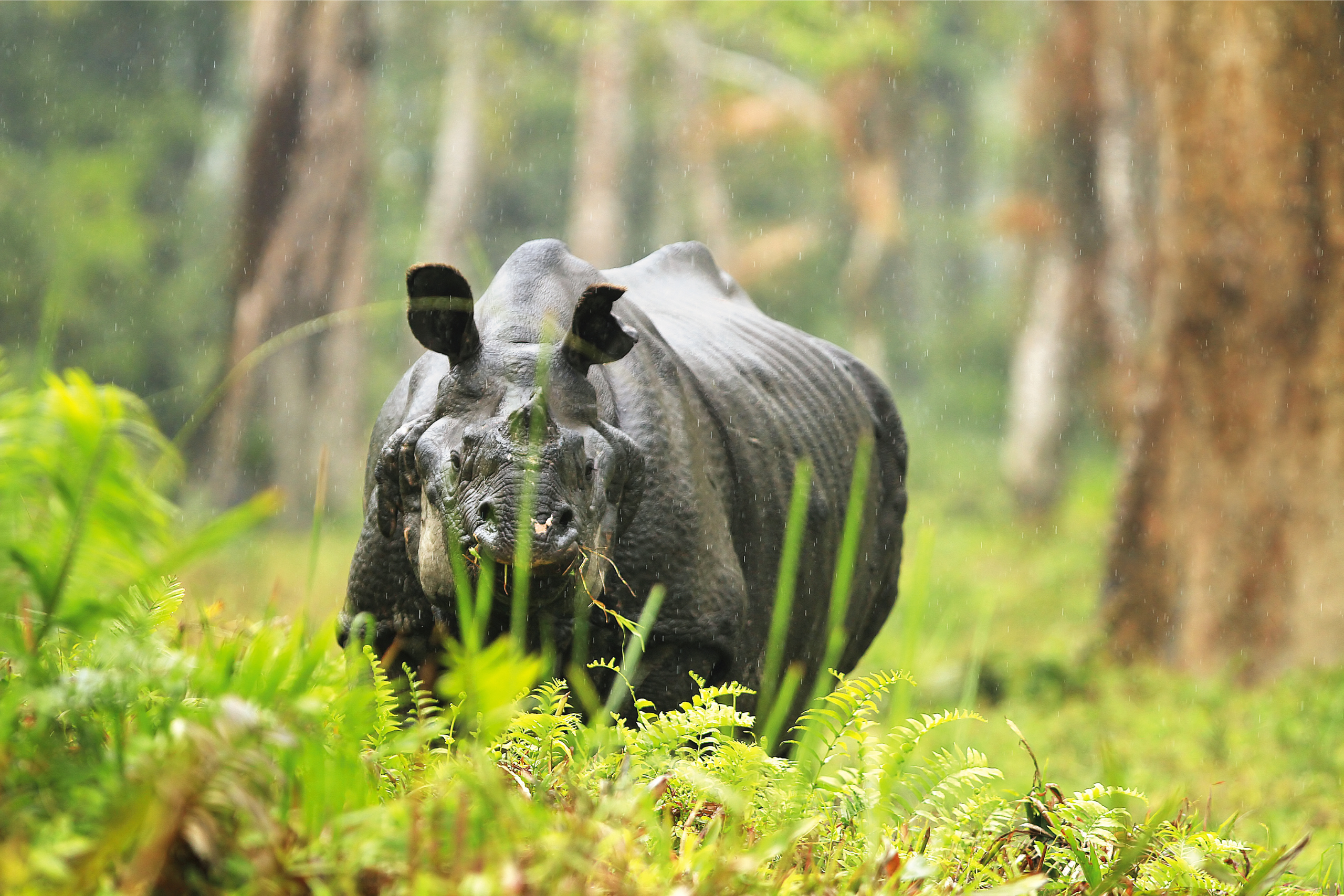
Kaziranga National Park, a couple of hours from Guwahati, holds the other half of Assam’s identity: it’s home to roughly two-thirds of the world’s greater one-horned rhinoceroses, alongside wild elephants, swamp deer, and a healthy population of Bengal tigers moving through its grasslands and flooded wetlands. A Jeep Safari at first light, when the mist is still sitting low over the grass, remains one of the most reliable wildlife encounters anywhere in India.
And then there’s the river itself. The Brahmaputra isn’t just Assam’s geography, it’s the lifeline and a cultural spine, and a multi-day cruise along it, such as the stretch from Jorhat past Majuli towards Kaziranga, has become one of the more distinctive slow-travel experiences in the country. These aren’t speedboat outings; the better operators run vessels with a handful of cabins, a sundeck, and itineraries built around stops at tea estates, Mishing tribal villages, the temples of Tezpur, and Kaziranga itself, with the odd sighting of the endangered Gangetic river dolphin thrown in along the way. Many of these cruises pause at Majuli, once the world’s largest river island and now shortlisted for UNESCO World Heritage status, where Vaishnavite monasteries called satras, Auniati among the most visited keep alive a five-hundred-year-old tradition of mask-making, manuscript painting, and devotional dance found nowhere else in India. It brings Assam together in one journey: tea country, wildlife, village life and the Brahmaputra, all experienced from the river.
1.1. Festivals of Assam
Assam’s festive calendar runs on an agricultural clock. Bihu, the state’s defining celebration, comes in three parts across the year: Bohag or Rongali Bihu in mid-April marks the Assamese New Year and the start of the sowing season with seven days of dance, music, and open-house visiting; Kati Bihu in October is a quieter, almost devotional observance, when lamps are lit in the paddy fields to protect the young crop; and Bhogali or Magh Bihu in January celebrates the harvest itself with communal feasts and bonfires. Rongali Bihu is the one most worth timing a trip around. Villages across Upper Assam, and particularly Majuli itself, open their homes to guests, exchange handwoven gamosas as gifts, and dance late into the evening to the beat of the dhol and the buffalo-horn pepa.
1.2. Food of Assam
Assam’s tastes favour sour and mild over the heat found elsewhere in India. Khar, an alkaline dish made from the ash of sun-dried banana peel simmered with raw papaya or pulses, is unlike anything eaten in the rest of the country, while masor tenga, a light and tangy fish curry, and pitha, rice cakes filled with sesame or coconut and made in dozens of regional variations, define the Bihu table. Rice, freshwater fish, and duck feature far more than the meat-heavy diets of the hill states further east.
1.3. Textiles of Assam
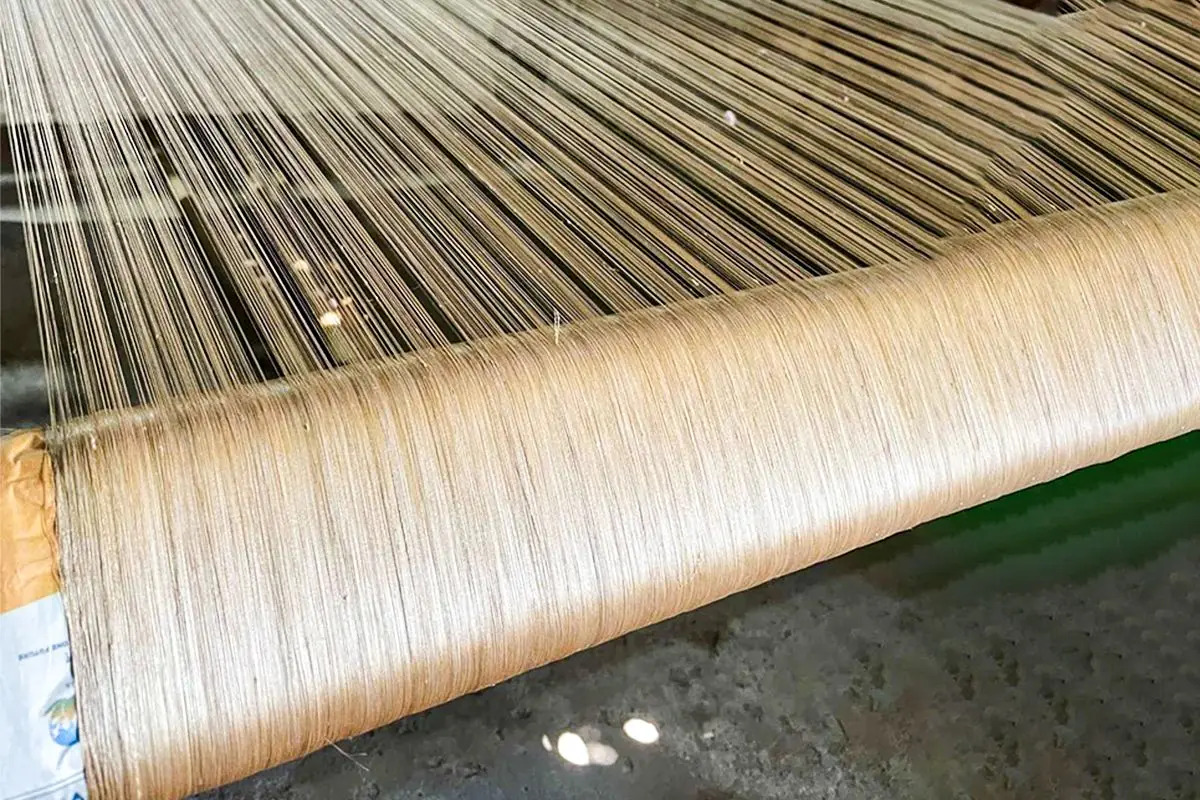
No visit to Assam is complete without Sualkuchi, a weaving village on the Brahmaputra’s north bank around half an hour from Guwahati, known for centuries as the “Manchester of the East.” Almost every household here still weaves, a tradition patronised by the Pala and Ahom kings and, later, singled out by Gandhi himself in 1946 as the model of self-reliant craft he wanted the rest of India to follow. Its looms produce three silks found together nowhere else on earth: muga, a golden-hued wild silk exclusive to Assam and traditionally reserved for royalty; pat, a lustrous ivory-white mulberry silk used for formal wear; and eri, a warmer, matte-textured “peace silk” spun from cocoons the moths are allowed to leave naturally. Woven into mekhela chadors, sarees, and gamosas on wooden looms in family courtyards, Sualkuchi’s textiles turn a half-day visit into a genuine encounter with a living industry, one that still employs tens of thousands of weavers, most of them women, and remains as central to Assamese identity as the tea gardens or the river itself.
2. Meghalaya: India’s Answer to Sakura Season
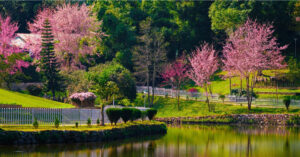
Ask most international travellers where to see cherry blossoms and the reflex answer is Kyoto. Few know that India has its own, and that it blooms nowhere near spring.
Meghalaya’s hills, and Shillong in particular, turn a deep, saturated pink every November, when the Himalayan wild cherry, Prunus cerasoides, a different species from Japan’s Prunus serrulata but visually almost indistinguishable bursts into an autumn bloom instead of the usual spring one. It makes Shillong one of the very few places on earth where the cherry blossom season falls in the wrong half of the year, and it has not gone unnoticed by the country most associated with the flower: In 2024, Japan became the official partner country for the Shillong Cherry Blossom Festival, a collaboration inspired in part by the resemblance. A dedicated Japan Arena brought Japanese culture into the wider programme of live music, food, art and fashion, while the 2024 edition drew around 58,000 visitors.
But Meghalaya’s better-known claim to fame lies a few hours south, in Sohra, still widely called Cherrapunjee, once recorded as the wettest place on earth. The rainfall here has shaped everything, dramatic waterfalls including Nohkalikai, one of India’s tallest, cathedral-sized limestone caves, and the region’s most extraordinary living structures, its root bridges. The Khasi and Jaintia tribes have spent generations training the aerial roots of rubber fig trees across streams to form living bridges, known locally as jing kieng jri, that grow stronger rather than weaker with age; Sohra’s double-decker bridge near Nongriat, reached by a steep multi-hour trek, is the most famous, though it is far from the only one, the surrounding hills hold around a dozen functioning root bridges, most far less crowded. A gentler alternative sits near Mawlynnong, a village around seventy kilometres from Shillong that was named the cleanest village in Asia in 2003 and has held onto the title through a genuinely community-run system of bamboo bins, a plastic ban, and shared civic pride rather than any government mandate. Its own single-decker root bridge, technically in the neighbouring hamlet of Riwai, is a short and easy walk, making Mawlynnong the rare Meghalaya destination that rewards a visitor regardless of fitness level, while Sohra rewards those willing to trek for it.
2.1. Festivals of Meghalaya
Meghalaya follows the rhythm of three distinct tribes. The Khasi celebrate Shad Suk Mynsiem each spring, a thanksgiving dance performed by unmarried men and women in the state capital to mark a good harvest and pray for the next one; the Jaintia hold Behdeinkhlam in Jowai each July, a dramatic purification festival involving symbolic driving-out of evil and disease; and the Garo, in the state’s west, celebrate Wangala each November, the “festival of a hundred drums,” marking the end of the agricultural year with drumming, dance, and rice beer that runs for days.
Shillong’s Soundtrack: Rock, Dylan and Choirs
Music is part of Shillong’s identity, and the city is often called India’s rock capital. Every 24 May since 1972, the veteran musician Lou Majaw has held a birthday concert for Bob Dylan. It has now run for more than fifty years and is billed as the world’s longest-running Dylan tribute. The choral side runs just as deep. Hymn-singing came to the region with 19th-century missionaries, and the Shillong Chamber Choir, founded in 2001 by Neil Nongkynrih, went on to win India’s Got Talent in 2010.
2.2. Food of Meghalaya
The state stays close to rice, pork, and fermentation across all three communities. Jadoh, rice cooked in pork blood and fat, is the closest thing Meghalaya has to a signature dish, typically served alongside dohkhlieh, a cold pork salad with onion and chilli, and tungrymbai, fermented soybeans cooked with black sesame and pork, a dish similar in spirit, if not in method, to Nagaland’s akhuni. The Garo, in the state’s western hills, favour a distinct style built around fermented fish and bamboo shoot.
2.3. Textiles of Meghalaya
Meghalaya’s signature fabric is ryndia, eri silk in the Khasi language, a soft, matte, wool-like cloth spun from the cocoons of the domesticated eri silkworm after the moth has emerged, earning it the name Ahimsa or “peace silk.” The process, from rearing silkworms and spinning to natural dyeing and weaving, is closely associated with women, particularly in Ri-Bhoi district. Umden-Diwon was recognised in 2021 as Meghalaya’s first dedicated Eri Silk Village. The craft earned Ryndia and Khasi handloom products formal Geographical Indication recognition in 2025, cementing their status as distinctive regional textiles.
Ryndia is used across shawls, garments and traditional dress, including the jainsem, the draped two-piece garment worn by Khasi women, while finer silk versions are often reserved for festive and ceremonial occasions. Jaintia and Garo communities maintain their own distinct weaving traditions, with differences in colour, pattern, fibre and form across the state. Together, they form a textile culture built on handweaving, local fibres and techniques that long predate the global conversation around slow fashion.
2.4. A Society Built Around Its Daughters
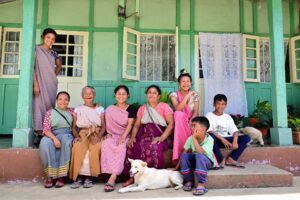
One more thing sets Meghalaya apart from almost everywhere else in India, is that the Khasi, along with the Jaintia and Garo, follow a matrilineal system, a rarity in India and in the world. Children take their mother’s clan name, a husband traditionally moves into his wife’s home, and the youngest daughter, the khatduh, becomes custodian of the ancestral property. It is matrilineal rather than matriarchal, though: the village councils are traditionally led by men, and the khatduh cannot sell ancestral land without her maternal uncle’s consent. For a guest, it’s a quiet reminder that India’s “many grammars” run all the way down to how a family is built.
3. Nagaland: The Land Between Sixteen Tribes
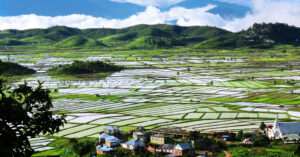
If Meghalaya’s calendar is scattered across the year by community, Nagaland’s answer is to gather everyone in one place at once.
The Hornbill Festival, held every year from 1 to 10 December at Kisama Heritage Village around twelve kilometres from Kohima, is Nagaland’s flagship event and one of the genuinely unmissable cultural gatherings anywhere in Asia, a ten-day meeting of all major Naga tribes, each maintaining its own morung, or traditional communal house, at the festival grounds, staffed by its own people rather than performers hired for the occasion. Visitors move between morungs watching war dances and harvest songs specific to each tribe, sampling smoked pork and bamboo shoot at food stalls run by the same families cooking it at home, and browsing a night bazaar in Kohima town selling handwoven shawls, wood carvings, and jewellery, each piece identifiably tied to the tribe that made it. An adjoining international rock music festival, and in recent years formal “partner country” pavilions from nations including the UK, France, and Switzerland, have turned Hornbill into as much a diplomatic and cultural exchange as a tourist draw, named, fittingly, after the hornbill bird that appears throughout Naga folklore and headgear alike.

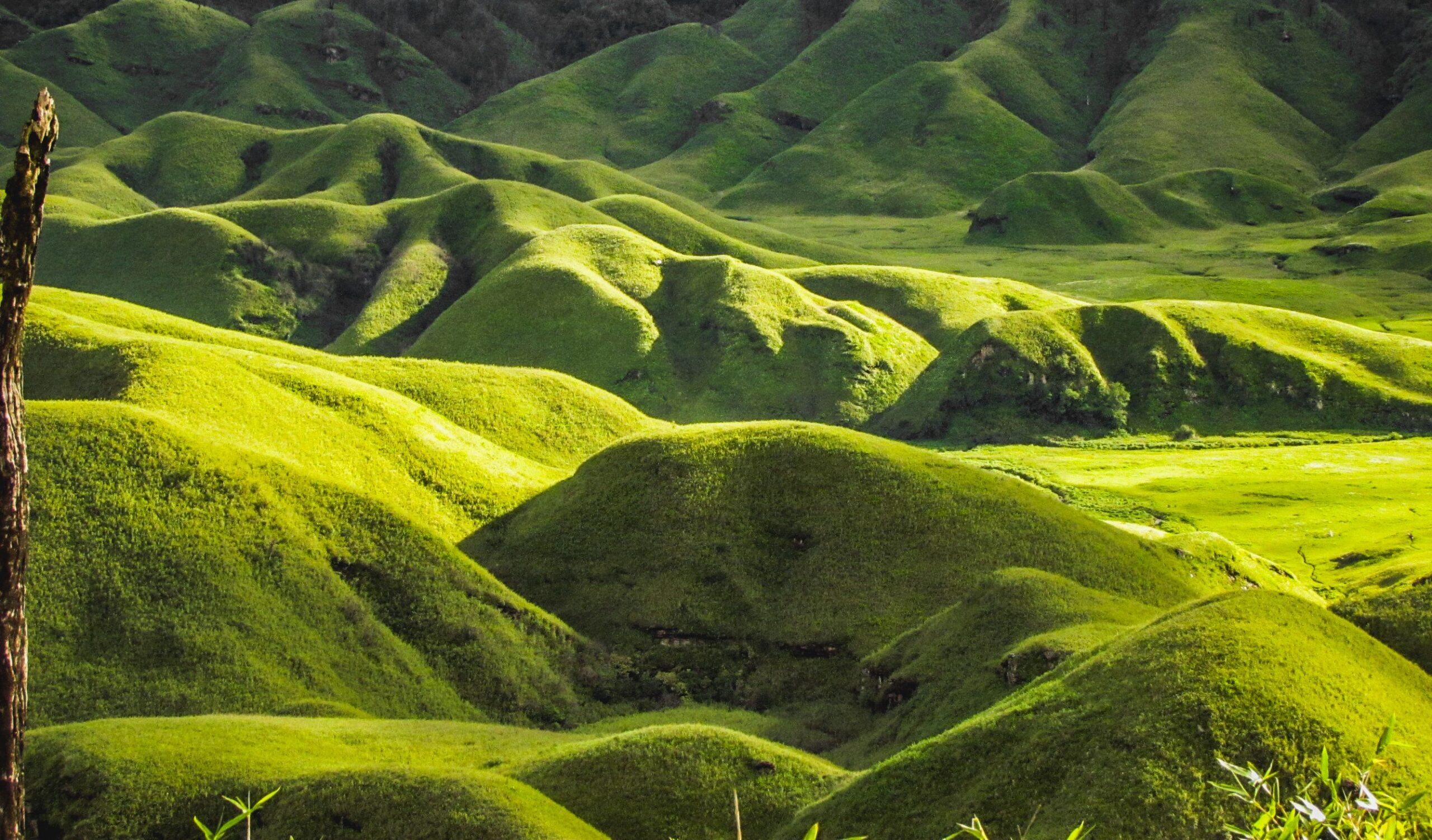
Beyond the festival dates, Nagaland’s deeper draw is Mon district, home to the Konyak tribe, once feared across the region as headhunters and now known instead for extraordinary facial tattoos worn by a rapidly dwindling number of surviving elders. Longwa village, Mon’s best-known settlement, sits directly on the India–Myanmar border, literally: the Konyak chief’s house is built with its roof spanning both countries, so that a family can have dinner in India and sleep in Myanmar. A visit here, arranged respectfully through a local guide, is less a photo opportunity than a genuine audience with a way of life that will not exist in another generation. For travellers who prefer landscape to village life, the Dzükou Valley, a high-altitude trekking basin on the Nagaland–Manipur border known for its June-to-September carpet of wild Dzükou lilies, offers one of the more serene multi-day treks in the entire Northeast.
3.1. Food of Nagaland
The food habit across Naga tribes centres on smoked pork, bamboo shoot, and akhuni, a pungent fermented soybean paste that plays a role similar to Meghalaya’s tungrymbai; Naga chillies, including the famously fierce Bhut Jolokia, appear in nearly every dish, alongside rice beer served at almost every social occasion.
3.2. Songs of the Hills: The Tetseo Sisters and Naga Folk Revival
Music is the other thing Nagaland carries in its voice. The Tetseo Sisters, four sisters from the Chakhesang Naga community who grew up in Kohima, sing Li, the traditional Chakhesang folk songs, in the Chokri language, often in a cappella harmony. They closed the Hornbill Festival in 2016, and their folk-fusion sound is part of a wider revival of Naga music. The choral tradition that arrived with missionary hymn-singing remains strong in the state’s churches, where tribal tunes are sometimes worked into choir arrangements, and a national rock contest runs alongside Hornbill itself.
4. The Corners Fewer People Reach: Sikkim
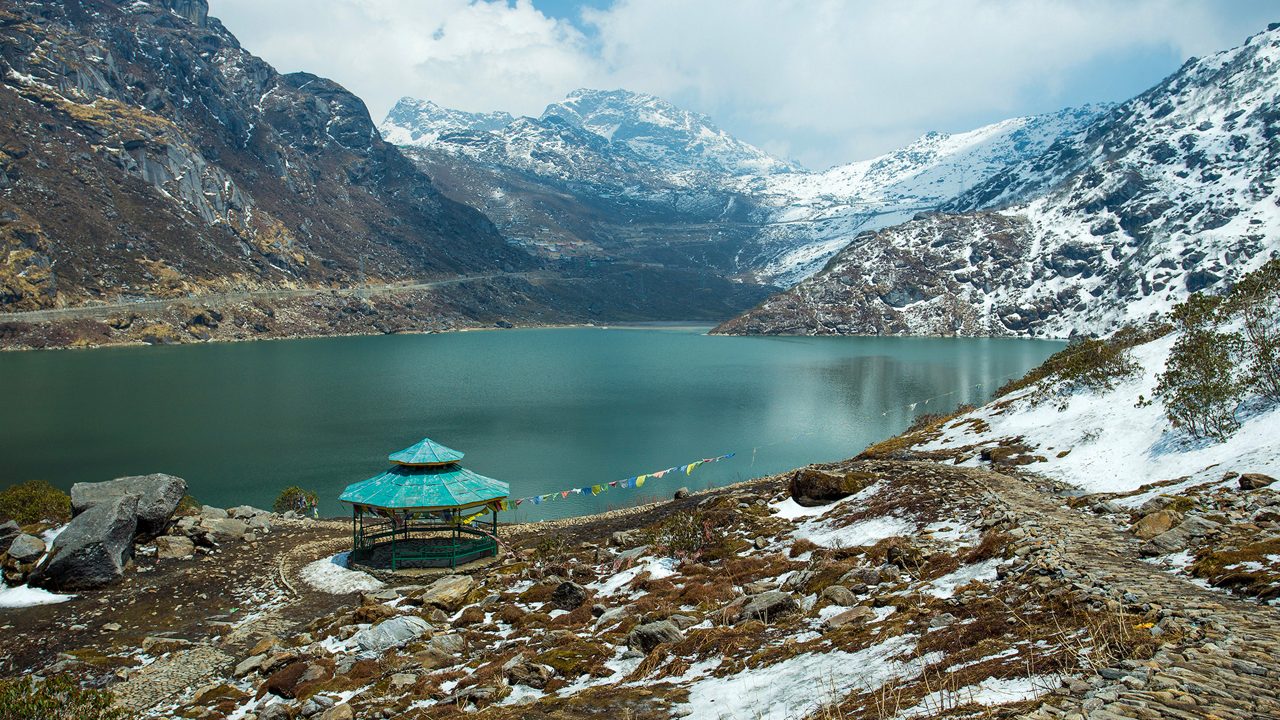
Assam is the Northeast most travellers encounter first. Sikkim tends to reveal more the further you go. Most visitors begin with Gangtok, but fewer continue along East Sikkim’s old Silk Route, south towards Temi’s tea country, or into Dzongu, where tourism remains deliberately limited to protect Lepcha land and culture.
East Sikkim holds the state’s most theatrical drive. Zuluk, a hamlet strung along thirty-two hairpin bends of the old trade route to Tibet, was once a stopover for mule caravans carrying wool and salt across the Himalayas; today it’s an emerging viewpoint town where the sunrise from Thambi viewpoint catches Kanchenjunga before it touches anything else. Further along the same route, Nathula Pass sits directly on the border with Tibet, one of the few Himalayan crossings still open to visitors on either side, its history as a Silk Route artery still visible in the stone cairns and prayer flags along the old trail. Fewer travellers still detour into Dzongu, a valley sealed off specifically to protect the indigenous Lepcha community’s land and way of life, a rare instance of a government choosing to limit rather than expand tourist access, which is precisely what keeps homestays here between the Teesta and Tholung rivers, and the centuries-old Tholung Monastery, feeling untouched rather than curated for effect.
West Sikkim delivers the mountain itself. Pelling has quietly become the definitive vantage point for Kanchenjunga in India, and not the “peek-a-boo” glimpse you get from most hill stations, but a full, close, unbroken wall of the massif, with none of the intervening ridgelines that soften the view from Darjeeling. On a clear morning, the same range resolves into what locals and monks have called the Sleeping Buddha for generations: the linked summits of Kumbhakarna (Jannu), Kanchenjunga itself, and Pandim forming the unmistakable silhouette of a reclining figure at rest, best seen from Pelling in the hour after sunrise, when the light is low enough to pick out every ridge as a feature of the face.
South Sikkim is the state’s gentlest chapter, and its most underrated. Ravangla, a quiet town built around the 130-foot Buddha Park (Tathagata Tsal), does one thing better than almost anywhere else in Sikkim: it frames the entire Kanchenjunga arc above the treeline, wider and less abrupt than the Pelling view, with the giant copper Buddha statue in the foreground giving the composition a sense of scale that a bare mountain photograph never quite achieves. A short drive away sits Temi, Sikkim’s only tea garden and India’s only certified-organic tea estate at an altitude, planted in 1969 by the state’s last Chogyal on a slope that runs down from Tendong Hill. Guests who stay overnight, the estate has a handful of heritage rooms built into a restored planter’s bungalow are woken for exactly one reason: on a clear morning, the same Sleeping Buddha silhouette that defines Pelling rises directly above the tea rows, so that the first light of day falls simultaneously on the mountain’s outline and on pickers already moving through the bushes below it.
None of this requires giving up comfort. Sikkim has quietly built one of the Northeast’s more sophisticated small-hotel and homestay scenes, and a week here can move between a heritage property in Gangtok, a planter’s bungalow at Temi, and a Lepcha family homestay in Dzongu without any of them feeling like a compromise.
4.1 Festivals of Sikkim
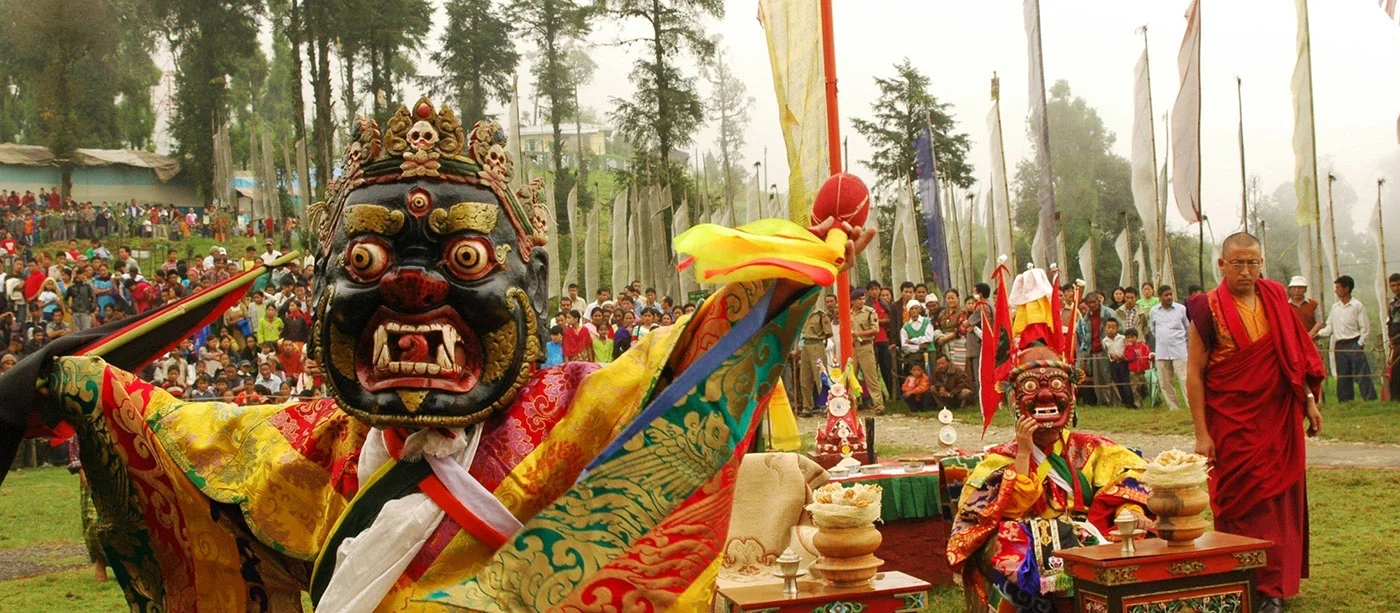
Sikkim festive calendar follows the Tibetan Buddhist calendar more closely than any other Northeast state. Losar, the Tibetan New Year, falls in February or March and is marked by monastery rituals, masked Chaam dances performed by lamas, and family visits that close government offices and tourist centres for the better part of a week. Saga Dawa, held on the full moon of the fourth Buddhist lunar month, commemorates the Buddha’s birth, enlightenment, and death in a single day of butter-lamp offerings and monastery prayer. Most distinctive of all is Pang Lhabsol, unique to Sikkim and unlike any festival elsewhere in the Buddhist Himalayas: held in late August or early September, it venerates Mount Kanchenjunga itself as Sikkim’s guardian deity, with monks performing the dramatic Pang-Toed warrior dance in elaborate red masks crowned with skulls, honouring the mountain that defines nearly every view in the state.
4.2. Food in Sikkim
The food habits of the state reflects its position between Nepal, Tibet, and Bengal. Momos and thukpa noodle soup are daily staples, alongside gundruk and sinki, fermented leafy greens and radish that appear in nearly every meal, and kinema, a fermented soybean dish similar in spirit to Nagaland’s akhuni and Meghalaya’s tungrymbai, suggesting a fermentation tradition that runs the length of the Himalayan foothills regardless of state border. Chhurpi, a hard yak or cow milk cheese chewed slowly or simmered into soup, and phagshapa, a pork dish served with radish and dried chillies, round out a cuisine built for cold mountain air.
5. Arunachal Pradesh: Where the Community Is the Host
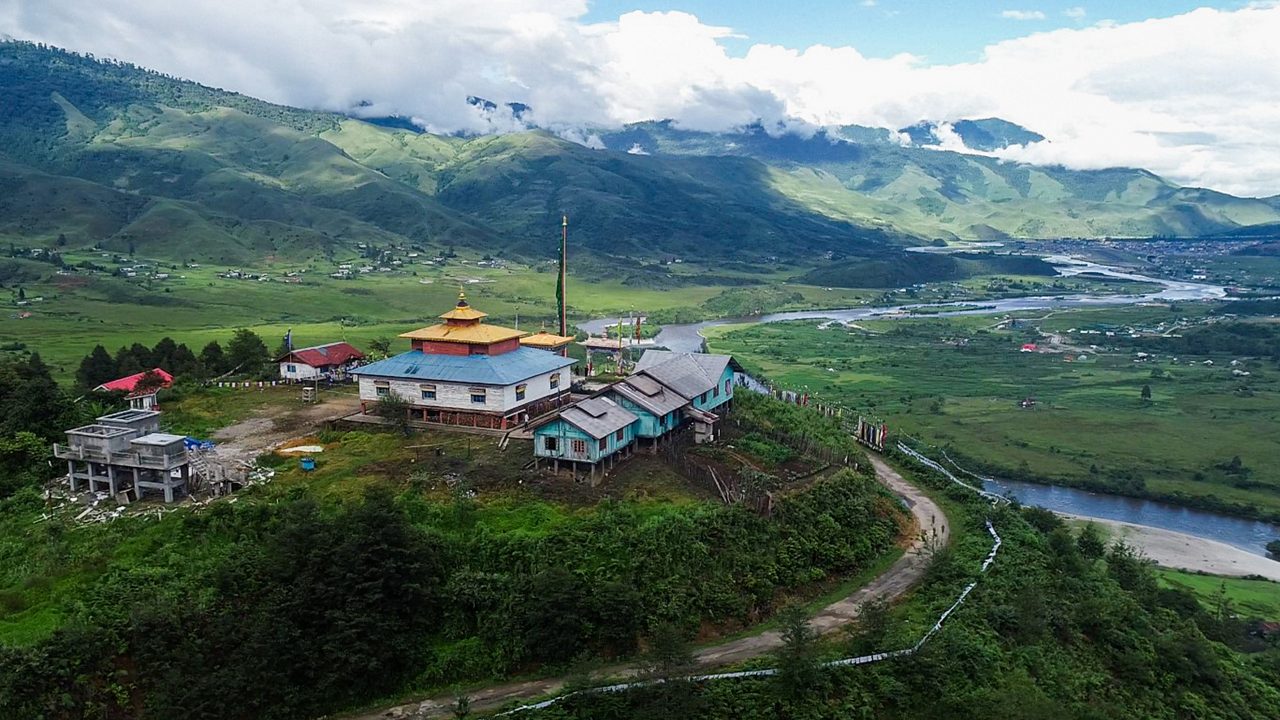
If Assam is the region’s most familiar front door, Arunachal Pradesh is one of its least understood. Covering more than 83,000 square kilometres, the state borders Bhutan, Tibet and Myanmar, and is home to 26 recognised tribes and numerous sub-tribes, many with their own languages, customs and festival traditions. Ziro Valley is where most first-time visitors start, but it is only the beginning of what the state offers.
Ziro sits in the Lower Subansiri district, a wide, pine-fringed valley of paddy fields farmed almost entirely by the Apatani, an indigenous tribe whose sustainable wet-rice cultivation and distinctive facial tattooing traditions have made their valley a UNESCO Tentative List candidate in its own right. For most of the year, Ziro is simply a place to slow down, to walk between terraced fields, stay in an Apatani home, and watch a way of life that has barely needed to change because it was already sustainable by design. Further west, Mechuka (also spelled Menchukha) sits in a high valley near the Tibetan border, its wooden Monpa houses and the centuries-old Samten Yongcha monastery giving it the feel of a hidden kingdom rather than a tourist stop, and it remains one of the least-visited valleys in the entire Himalayan arc. On the road toward Tawang, Dirang and Bomdila offer a gentler introduction to West Kameng, apple orchards, natural hot springs, a state-run yak breeding centre, and the nearby fortified village of Thembang, where traditional Monpa stone-and-wood architecture survives largely unchanged. Further east, Namdapha National Park, India’s third largest, and the river town of Pasighat on the Siang (as the Brahmaputra is known before it enters Assam) open up the state’s wildest and least-mapped corner, popular with birders and rafters rather than sightseers.
5.1. Festivals of Arunachal Pradesh
Festivals run through nearly every month of the Arunachali calendar, and they are worth planning a trip around rather than stumbling into. Losar, the Monpa New Year, unfolds over up to fifteen days around Tawang each February or March, with masked Cham dances at the monastery and homes offering guests khapse, a fried pastry, alongside chhaang, the local barley beer. Torgya, held each January at Tawang Monastery, is a Buddhist purification ritual performed by monks in elaborate masks against a backdrop of snow-covered peaks — one of the most photographed festivals in the state, and one of the least crowded, since few outsiders yet know to time a trip around it. Mopin, the Galo community’s harvest festival held each April around Aalo and Basar, sees women in white gale skirts perform the circular Popir dance while participants smear each other with rice powder as a gesture of prosperity. Solung, the Adi tribe’s post-sowing festival centred on Pasighat each September, is a genuinely working festival rather than a staged one — fields are blessed, granaries visited, and ancient oral histories recited by community elders rather than performers. The Nyishi community’s Nyokum Yullo, celebrated in February around Itanagar and Yazali, and the Apatani’s own Dree festival each July, round out a calendar in which almost every season has its own reason to travel.
5.2. Music in the Paddy Fields: The Ziro Festival
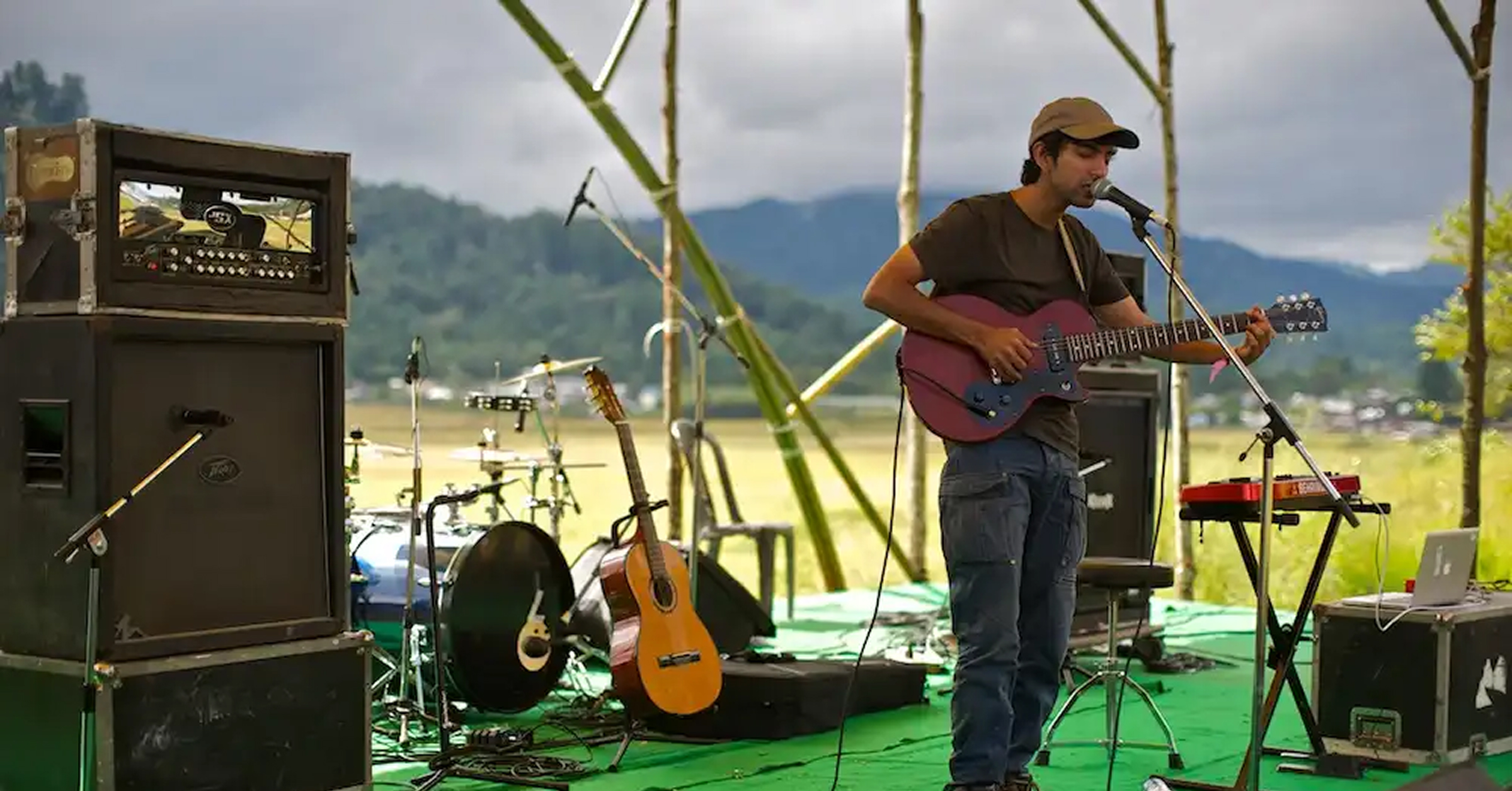
has become one of Arunachal Pradesh’s quieter draws, thanks to the Ziro Festival of Music. Started in 2012 by Ziro resident Bobby Hano and Delhi guitarist Anup Kutty, it is an independent music festival, mostly Indian indie acts alongside a few international names. It is staged in Apatani paddy fields on bamboo stages named Donyi (sun) and Polo (moon) after the region’s indigenous faith. Past line-ups have included Shillong’s Lou Majaw, the veteran rock musician.
5.3. Food of Arunachal Pradesh
Here the taste shifts with altitude and community. Monpa cuisine around Tawang leans Tibetan, built around thukpa noodle soup, momos, and butter tea, while lowland tribes like the Adi and Nyishi favour smoked meat, bamboo shoot, and apong, a fermented rice or millet beer that appears at nearly every festival and family gathering. Pika pila, a wild Sichuan-pepper-like spice unique to the region, and fermented fish dishes among riverine communities add flavours found almost nowhere else in India.
5.4. Tawang’s Moment
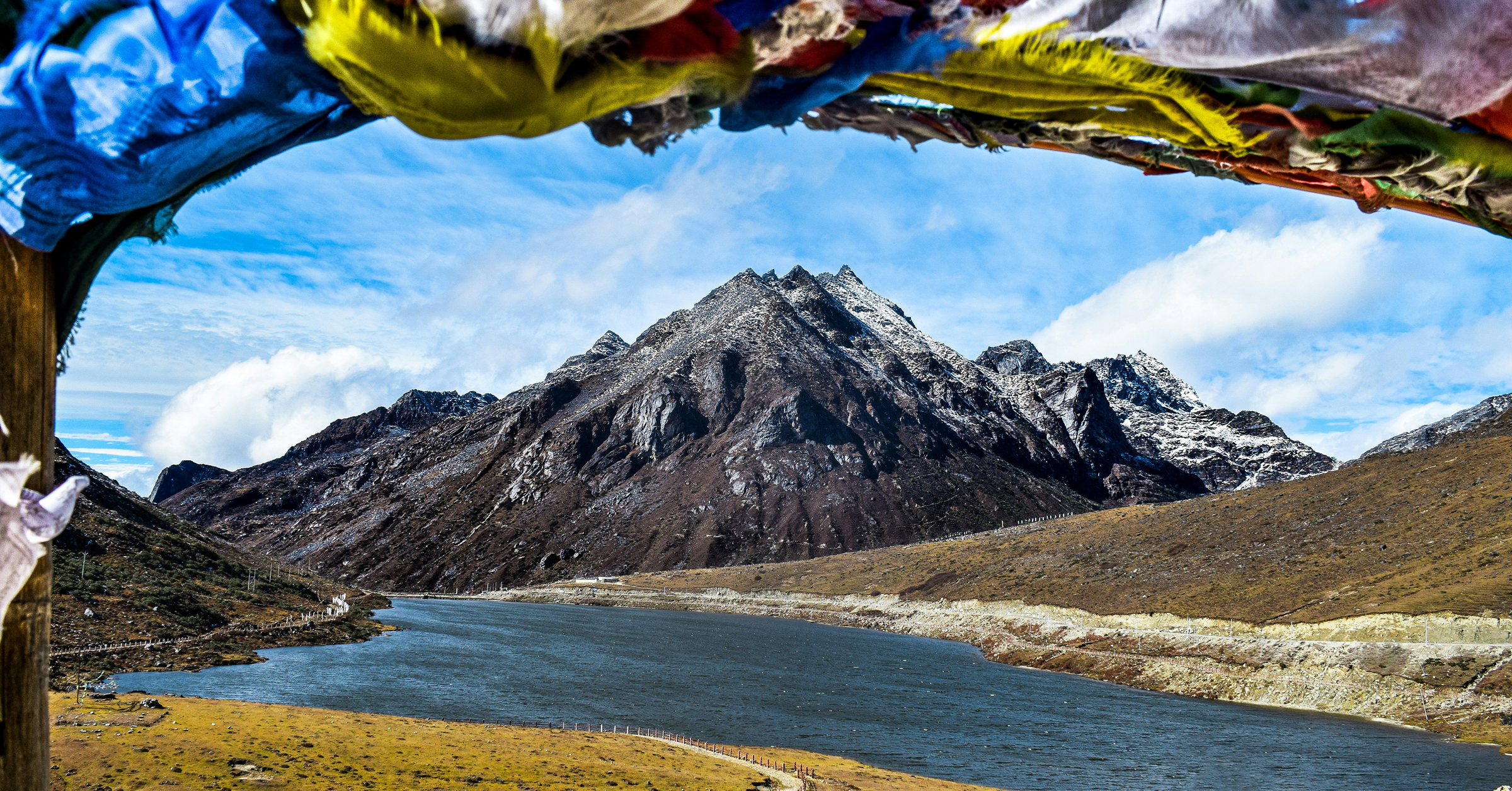
If any single destination captures the Northeast’s shift from “hard to reach” to “worth the reach,” it’s Tawang. Tucked into the western edge of Arunachal Pradesh at around 10,000 feet, close enough to the Line of Actual Control that its geopolitics are never far from the conversation, Tawang has spent decades known mainly to pilgrims and the odd hardy backpacker willing to survive the sixteen-hour drive from Guwahati over the Sela Pass. It holds Asia’s second-largest Buddhist monastery, founded in the seventeenth century, and is the birthplace of the sixth Dalai Lama, credentials that should have made it a headline destination long ago.
What’s changing is a mix of infrastructure and attention arriving at once. IHCL, the hospitality group behind the Taj brand, opened its Vivanta property in Tawang, the town’s first branded hotel, putting a serious hospitality address on a map that, until recently, offered little beyond guesthouses and homestays. It’s a small but telling signal: when a major hotel group commits to a border town at 10,000 feet, it’s usually because the demand curve has already started bending upward. Tawang still takes effort to reach. The drive is long and mountain weather can affect the route, but improved access and accommodation are gradually bringing it onto the radar of more travellers.
6. Planning the Trip: A Practical Guide
6.1. Best time to go
October to April is the safest window across most of the region, post-monsoon skies, dry roads, and clear mountain views. Assam and Meghalaya are workable through spring as well, though Meghalaya’s cherry blossoms are strictly a November event. Sikkim’s high-altitude valleys, including Yumthang and Gurudongmar, are best from March to June and again in September–October; the same windows apply to Tawang, where winter (December–February) brings heavy snow that can close the Sela Pass entirely. Arunachal Pradesh’s festival calendar, more than any single season, should drive timing for that state – January for Torgya, February–March for Losar, April for Mopin, September for Solung and the Ziro Festival. Nagaland’s Hornbill Festival is fixed every year from 1 to 10 December.
6.2.Permits – the part people forget
Northeast India runs on a permit system that catches first-time visitors off guard, so it’s worth getting this right before you book flights.
- Indian citizens need an Inner Line Permit (ILP) to enter Arunachal Pradesh, Nagaland, and Mizoram. These are inexpensive and usually processed online within a few days through each state’s official portal, or on arrival at designated checkposts. Assam, Meghalaya, Tripura, and Sikkim do not require an ILP for Indian nationals – though Sikkim does require separate, easily arranged permits for restricted high-altitude zones like Tsomgo Lake, Nathula, Gurudongmar, and Yumthang, typically issued through a registered local operator.
- Foreign nationals need a Protected Area Permit (PAP) for Arunachal Pradesh, Nagaland, Manipur, and Mizoram, and a Restricted Area Permit (RAP) for parts of Sikkim. These rules were tightened again in December 2024 after a period of relaxation, so it’s worth checking current requirements close to your travel dates rather than relying on older guides. PAPs are generally arranged in advance through a registered travel agent, often requiring a minimum group size of two – a rule that particularly affects independent travel to Mon district in Nagaland and Mechuka or Tawang in Arunachal Pradesh, so these trips benefit from being booked as a small private group well ahead of time.
- Assam, Meghalaya, and Tripura require no permits at all for Indian or foreign travellers, which is part of why Assam remains the region’s easiest entry point.
6.3. Getting there
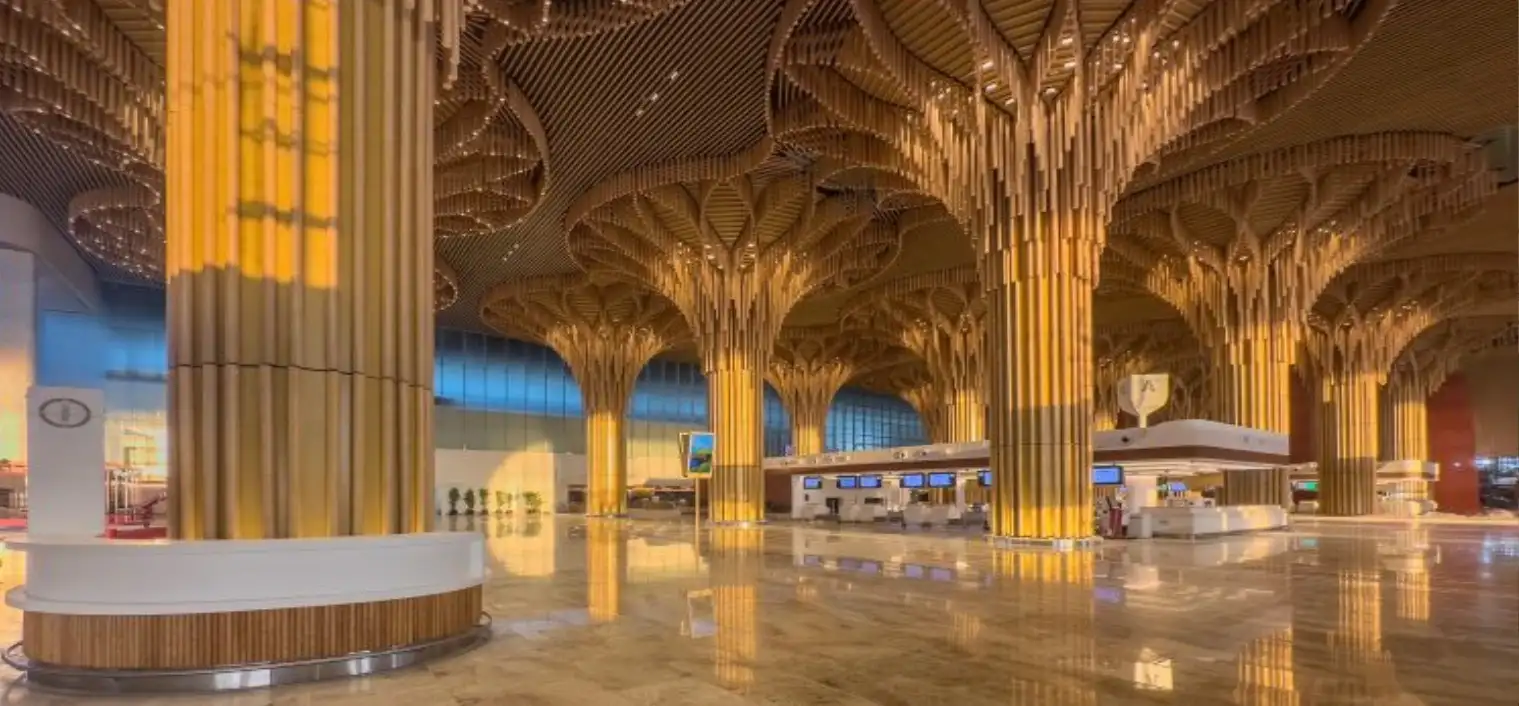
Guwahati’s Lokpriya Gopinath Bordoloi International Airport is the region’s main air hub and, with the city’s rail station, the practical starting point for Assam, Meghalaya, Nagaland and onward journeys into Arunachal Pradesh. Its new Terminal 2, “The Bamboo Orchids”, opened for commercial flights on 22 February 2026. Billed as India’s first nature-themed airport terminal, it is designed for 13.1 million passengers a year and built with about 140 tonnes of locally sourced Northeast bamboo, a “Sky Forest” of indigenous plants, and fast-track immigration. Airlines moved across in phases, with IndiGo shifting on 20 July 2026. Bagdogra, near Siliguri, is the usual gateway for Sikkim and Darjeeling; Gangtok’s own Pakyong Airport now offers limited direct flights, cutting the road journey considerably when weather permits. Dimapur is Nagaland’s nearest airport, roughly a three-hour drive from Kohima. Tawang is reached by road from Guwahati or Tezpur via Bomdila and the Sela Pass, a journey best broken into two or three days rather than attempted in one push.
6.4. How to sequence a trip
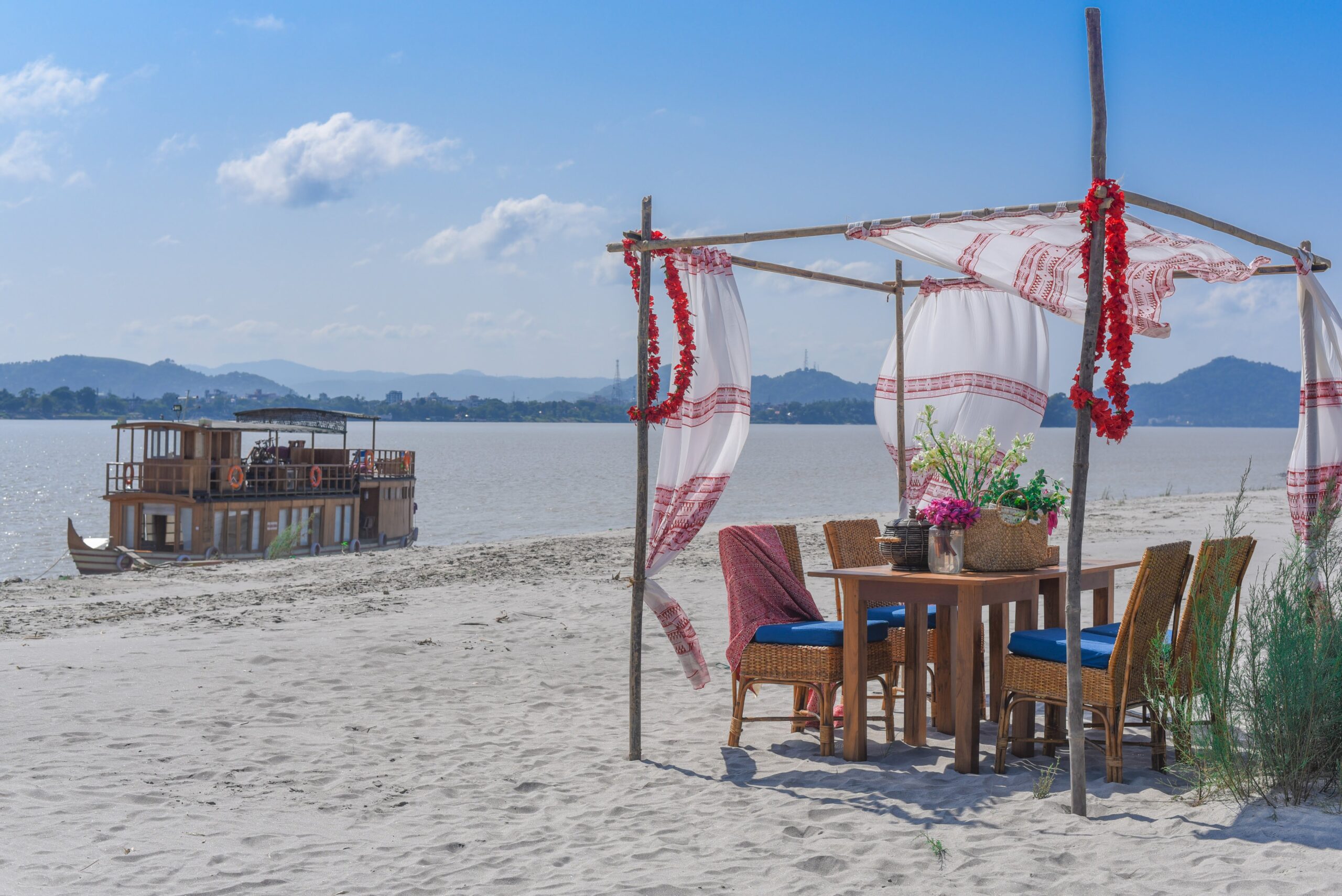
A first Northeast journey works best as one region done properly rather than all eight states rushed. A ten-to-twelve-day circuit through Assam – Guwahati, a Brahmaputra cruise or Kaziranga safari, a night or two among the tea estates, pairs naturally with an onward loop into Meghalaya, taking in Shillong, Sohra’s root bridges, and Mawlynnong, timed for November if the cherry blossom season is the draw. Our ten-day journey Rivers, Rhinos & Rhythms of the East, follows the Assam half of this, from Kolkata to the Brahmaputra and Kaziranga. Nagaland works best as its own trip built around the Hornbill Festival’s fixed December dates, extended a few days further into Mon district for Longwa village, or into the Angami highlands for a Dzükou Valley trek. Sikkim deserves its own dedicated week, and rewards a route rather than a base: Gangtok to start, a loop through East Sikkim’s Zuluk and Nathula, then south to Ravangla and Temi for the Sleeping Buddha view, finishing west through Pelling before looping back. Arunachal Pradesh works best as two or three distinct trips rather than one – Ziro Valley for the Apatani community and its September festival, Mechuka or Dirang for the state’s least-visited valleys, and Tawang, further north and considerably more remote, for travellers who’ve already done a Northeast trip and are ready for something further from the paved road. Book Tawang and Nagaland’s permits and hotels well in advance, and build in weather buffer days around the Sela Pass.
FAQ
Q1. Is Northeast India safe and suitable for luxury travel right now?
Yes. Assam, Meghalaya, Sikkim, Nagaland, and Tripura see steady international traffic and no unusual advisories, with established private-guide networks. Manipur is currently excluded from most luxury itineraries pending stability.
Q2. Which Northeast state is easiest for a first-time visitor?
Assam and Meghalaya, since neither requires permits for Indian or foreign nationals and both have well-established tourism infrastructure, from Kaziranga safaris to Shillong’s cafe culture and root-bridge treks.
Q3. What visa and permit requirements apply to foreign nationals?
Foreign nationals need a Protected Area Permit (PAP) for Arunachal Pradesh, Nagaland, Manipur and Mizoram, and a Restricted Area Permit (RAP) for parts of Sikkim. Assam, Meghalaya and Tripura need none. Travel Scope assists all its travellers in obtaining the permits required to visit protected and restricted areas, including Tawang and Mon district, and handles the paperwork well ahead of travel.
Q4. How many days should a luxury itinerary allow?
A single-region trip – Assam, Sikkim, Meghalaya, or Nagaland works well in seven to ten days. Combining two regions comfortably needs closer to two weeks, given how much driving time the terrain demands.
Q5. When is the best time to see Meghalaya’s cherry blossoms, and can the root bridges be combined with the same trip?
Meghalaya’s Himalayan wild cherry blooms for a short window between late October and mid-November, coinciding with the Shillong Cherry Blossom Festival. Sohra’s root bridges and Mawlynnong are both within a few hours of Shillong and combine easily into the same week-long trip, regardless of season, though the root bridges are at their most dramatic during and just after the June–September monsoon.
Q6. What luxury accommodation exists in such a remote region?
More than most travellers expect. Assam has the deepest bench: a boutique Brahmaputra Vessel with a handful of cabins and teakwood-and-woven-textile interiors; Diphlu River Lodge, a 12-cottage eco-lodge on the edge of Kaziranga; the two-room Kathoni homestay on an organic farm; The Postcard in the Durrung Tea Estate near Tezpur, with 12 rooms and suites set in 1,400 acres of tea; Wild Mahseer, a heritage tea-bungalow stay in the Addabarie Tea Estate.. In Meghalaya, there is the lakeside Ri Kynjai. Vivanta Tawang, the town’s first branded hotel, offers 80 rooms at 10,000 feet with heated wooden floors. In the Darjeeling hills, Glenburn Estate and Singell Tea Estate offer planter’s-bungalow stays, and Cochrane Place by Teesta Hotels is a restored colonial home overlooking the Ambootia Tea Estate in Kurseong. Beyond these, in places like Ziro, Mechuka and Longwa, stays are small and community-run by design.
Q7. When is the best time to go, and can it be built around an event?
October to April is the most reliable window. Travel Scope builds itineraries around anchor dates such as the Hornbill Festival (Nagaland, 1-10 December), Meghalaya’s autumn cherry blossom (late October to mid-November) and Losar in Tawang and Sikkim (February/March). We also plan around the region’s early daylight: because the Northeast sits far east of India’s single time zone, the sun can rise as early as 4 am in summer and set by 4-4:30 pm in winter. Our itineraries schedule sightseeing and mountain drives for the morning and early afternoon.
