
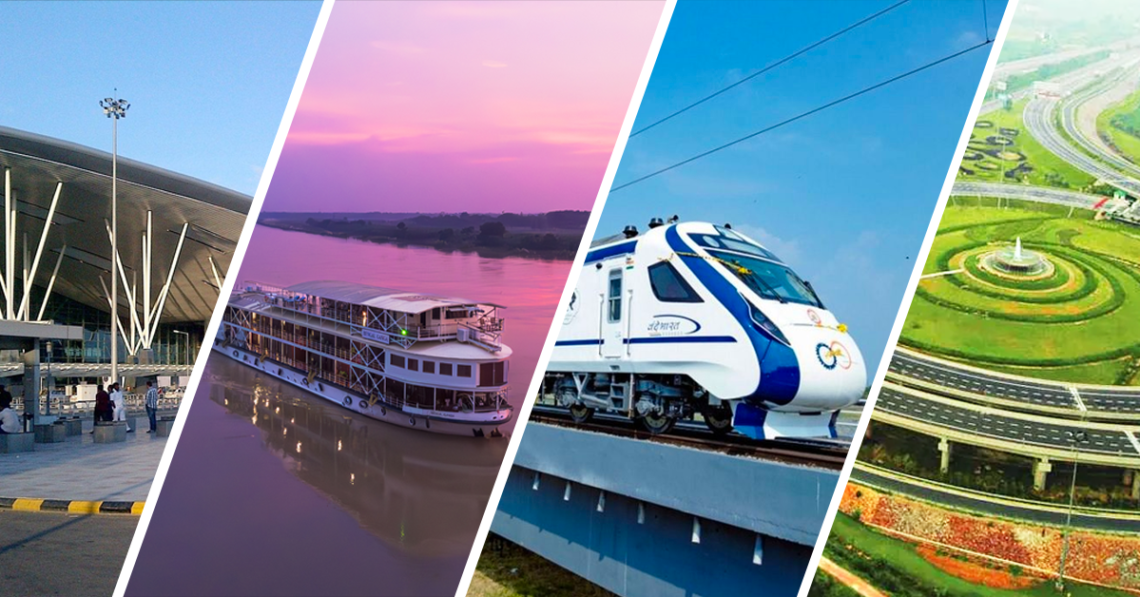
India is a country where distance tells stories. Mountains, rivers, coasts, and deserts – each region bound by an expanding web of air routes, highways, tunnels, and rails. For decades, travellers imagined India as a place of “wild, uncontrolled traffic” and “crowded trains”, the kind of logistical chaos that made the movement an adventure in itself.
That image is giving way to a different reality. Over the last decade, India has quietly built one of the world’s most extensive and sophisticated travel networks. From private charters that now make it easy to access remote safari lodges, to all-weather tunnels that cut through the Himalayas, to high-speed trains and sleek expressways redefining long-distance travel, the country’s connectivity has evolved faster than many realise.
Today, how you travel in India is no longer a question of endurance but of choice. Movement here can be as seamless as it is soulful, an experience shaped as much by modern design as by ancient geography.
This guide explores the modern ways to travel across India – from high-speed rails and redesigned airports to expressways, tunnels and private charters reshaping how the country moves.
1. Air Travel & Private Charters: The New Indian Sky

India’s airport network has scaled quickly, with the regional-connectivity programme UDAN activating hundreds of short-haul routes and bringing once-remote areas into the national grid. As of 2024, the Ministry of Civil Aviation reported 625 UDAN routes, and a network that has more than doubled since 2014, connecting 90 airports alongside water aerodromes and heliports.
Redefining Arrival
There was a time when arriving in India meant surrendering to a certain chaos, crowded terminals, long queues, and a pace that felt entirely its own. Today, that image belongs firmly to the past. India’s new generation of airports rivals the best in Asia, built with scale, art, and sustainability in mind, designed not only for movement but for mood.
At Travel Scope, our Meet & Greet support at key international airports brings calm and clarity to the arrival experience. Guests are welcomed at the arrivals area, guided through formalities, and accompanied to the terminal exit. It’s a smooth, assured start, free from the usual stress of long-haul travel.
Delhi – India’s Flagship Gateway
At the 2025 Skytrax World Airport Awards, India’s gateways made a collective statement on the world stage. Delhi’s Indira Gandhi International Airport was crowned Best Airport in India and South Asia for the 7th consecutive year, ranked 32nd globally, and placed among the top ten airports worldwide handling over 70 million passengers annually. Yet its terminals remain quiet, art-filled spaces. The arrival hall shimmers with brass installations inspired by mudras–symbolic hand gestures, while premium travellers glide through dedicated immigration corridors, lounges, and chauffeur-connect services. It feels less like a gateway and more like a statement of confidence.
Mumbai – Architecture Meets Motion
In the West, Chhatrapati Shivaji Maharaj International Airport, Mumbai, remains an architectural showpiece. Terminal 2 is a glass-and-marble canopy where global design meets Indian rhythm. The GVK Lounge regularly ranks among the world’s best; private meet-and-assist teams escort guests from the jet bridge to the car without a pause.
Navi Mumbai – The Next-Gen Western Hub
And on the horizon, Navi Mumbai International Airport–newly inaugurated and built to handle 20 million passengers in its first phase is all set to transform western India’s access once it opens fully. Designed with multimodal connectivity in mind, it will link directly to metro, expressway, and even water-taxi systems, placing it on par with the world’s most forward-thinking hubs.
Hyderabad – Frictionless Travel, Engineered
In further South, in Hyderabad, the Rajiv Gandhi International Airport sprawls over 5,500 acres, handling millions in sleek, understated elegance. Its design favours light, green zones and short walking distances. Hyderabad was also among the first airports in Asia to integrate biometric boarding, giving travellers a friction-free path from curb to cabin.
Bengaluru – India’s Garden Terminal
Then there is, Bengaluru’s Kempegowda International Airport ranked 48th globally and earned the title of Best Regional Airport in India and South Asia. It’s Terminal 2, India’s first 5-star rated terminal, reimagines travel as sensory immersion – a benchmark for what next-gen Indian infrastructure looks like when built for luxury and sustainability. Terminal 2, nicknamed “The Garden Terminal,” is a vast space of bamboo, copper, and living greenery–India’s answer to Singapore’s Changi aesthetic. It features over 95 check-in counters, six e-immigration gates, art installations from across Karnataka, and the ‘080 Lounge,’ a quiet retreat where architecture and local design merge. It’s an arrival that feels like an experience, not a process.
A Solar-Powered Gateway: Kochi International Airport
Kochi International Airport, which links India to key Middle East hubs such as Dubai, Abu Dhabi and Doha, is also one of the country’s strongest sustainability stories. It became the world’s first airport fully powered by solar energy in 2015 and now runs its operations on an extensive solar network backed by additional green energy projects.
For travellers, this means their journey often begins at a gateway where infrastructure and responsibility work together: long-haul connectivity to the Gulf matched with a significantly lower carbon footprint than a conventional hub. It’s a quiet but tangible expression of how India’s aviation growth is aligning with a more climate-conscious future.
Across all these gateways, the thread is unmistakable – space, silence, and service. Airports here now express an emerging aesthetic of quiet confidence: one that says India has arrived, and it welcomes the world on its own elegant terms.
Private Charters: Time as the New Luxury

For high-end travellers, private aviation is reshaping how India’s remote destinations are reached. Wildlife reserves, heritage estates, and Himalayan bases become significantly more accessible when long drives are replaced by direct charter flights.
Travel Scope partners with a trusted network of private aviation operators and aircraft owners to facilitate seamless private flying, across India or internationally. This ensures guests have flexibility in routing, privacy, and a smoother, faster way to travel. Our accessible fleet spans light, mid-size, and heavy jets. Popular options include:
- Super King Air B-200 GT: Ideal to land in small air-strips to access remote locations.
- Cessna Citation XLS+:A versatile 9-seater ideal for fast, efficient travel across India.
- Dassault Falcon 2000: An 8–10 seater offering spacious cabins and extended range for longer journeys or international sectors.
- Embraer Legacy 600: A 13-seater for larger groups seeking comfort on extended routes.
Illustrative routings for luxury guests
- Himalayan foothills: Charter into Pantnagar for Jim Corbett to skip long road transfers; hop further east to Palia for Dudhwa’s tall-grass wilderness.
- Northern icons: Fly into Agra for flexible Taj timing. For big-cat country, a private hop toward Sawai Madhopur places you close to Ranthambore. Jawai’s granite country and leopard habitat become practical via Sirohi airstrip.
- Central India’s parks: Charters into Gondia or Umaria compress transfer times for Kanha and Bandhavgarh, making two-park circuits comfortable in one itinerary.
- South India’s heritage arc: Quick hops into Mysuru for Nagarhole or into Vidyanagar for Hampi reduce winding-road fatigue. Into Kochi for the Western Ghats and backwaters keeps the day unhurried.
- Northeast and the tea-river belt: Into Bagdogra for Darjeeling or Jorhat/Tezpur for Kaziranga streamlines access to mountains and floodplains in one plan.
How it feels?
Quiet cabin. Glass of something crisp. The city falls away and the land opens: sal forest, granite domes, braided rivers. You step onto the tarmac with a small team waiting. While others are still in transit, you are already settling in for a late-afternoon game drive.
Why it matters?
For global travellers, private aviation in India is not a flex. It is smart logistics. It compresses distance without flattening the experience, and it safeguards the one thing luxury travel values most: time.
2. Trains: The Pulse of India
There are few sounds as deeply woven into India’s identity as the rhythm of a train on steel tracks. Once a colonial inheritance, today the Indian rail experience is a reflection of modern ambition and timeless romance – a journey that moves as much through culture as it does through landscapes.
For global travellers, this evolution tells a new story: the railways of India are no longer about endurance or nostalgia alone; they are about choice, comfort, and rediscovering pace itself.
Modern Speed Meets Nostalgia
Vande Bharat Express
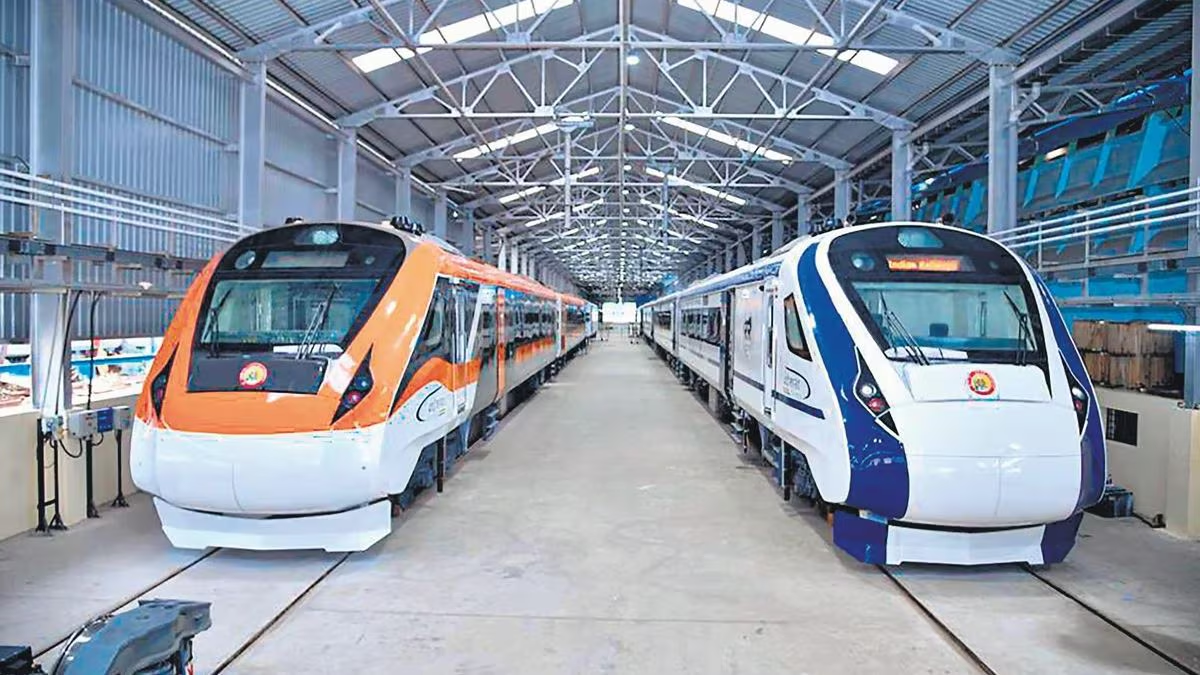
If the Indian rail network was once a test of patience, the Vande Bharat Express has redefined the rules of motion. Designed and built entirely in India, these sleek, semi-high-speed trains travel at up to 160 km/h, cutting the Delhi–Varanasi journey to about eight hours and Delhi–Agra to just over ninety minutes.
Step inside, and the atmosphere feels closer to a business-class cabin than a conventional train – reclining seats, panoramic windows, automated doors, Wi-Fi, and a quiet, streamlined design that prioritizes comfort. India’s new-generation trains are moving steadily toward global benchmarks in speed, efficiency and onboard experience, while still retaining a distinctly Indian character in how they welcome and move travellers.
Luxury Rails: The Deccan Odyssey
The Deccan Odyssey remains one of India’s signature luxury trains, notable for the way it moves beyond the usual Golden Triangle routes. Its week-long circuits cover off-beat destinations across Maharashtra and the Deccan plateau – Nashik’s wine country, the cave temples of Ajanta–Ellora, Kolhapur, Ratnagiri and select extensions into Rajasthan and Gujarat. The appeal is the cruise-like flow: unpack once, explore daily.
The Mountain Railways
Not every train in India is about speed. Some are about surrender. The UNESCO-listed Mountain Railways of India, including the Darjeeling Himalayan Railway, Kalka–Shimla Railway, and Nilgiri Mountain Railway, are living museums of steam and slope. Here, narrow-gauge lines wind through cedar forests and tea gardens, crossing arched stone bridges from the colonial era. The journey is unhurried, almost meditative.
In the Darjeeling line, the famous “Toy Train” climbs from tropical plains to mist-laden heights, revealing layer upon layer of mountain life. It’s slow travel at its purest, where arrival isn’t the point, presence is.
How It Feels?
To travel by train in India today is to feel both movement and memory. The metallic rhythm underfoot is the same one that once bound empires, yet the experience has evolved into something deeply personal. Whether you’re reclining in a high-speed cabin or toasting champagne in a vintage salon, the journey feels alive–cinematic, sensory, and entirely your own.
Why It Matters?
For the global traveller, India’s modern rail renaissance is proof that luxury here is not about excess but access – to culture, to stillness, to story.
It’s a reminder that sometimes the most meaningful journeys don’t happen above the clouds, but on the ground, where every passing landscape tells a little more of who India is, and what it’s becoming.
3. Roads & Expressways: The Freedom of the Open Highway
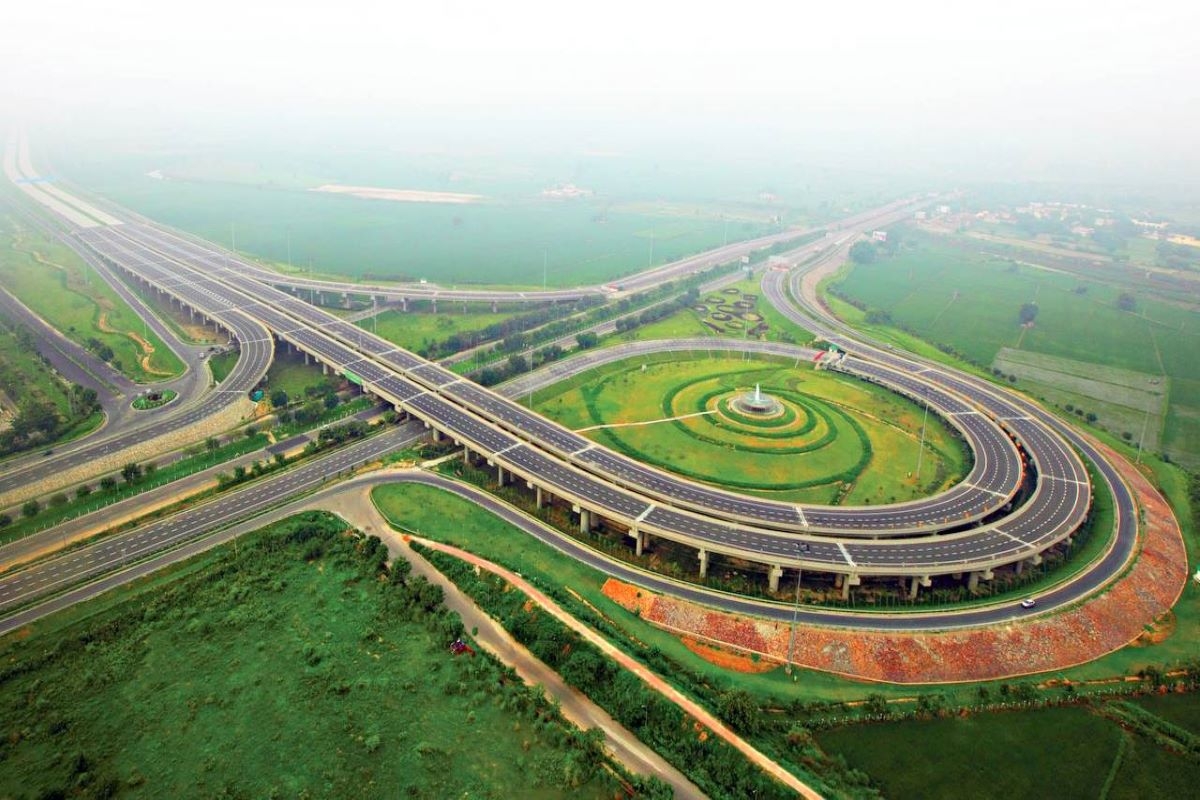
Once, a long road in India meant unpredictability: unexpected delays, rough stretches, and a sense of endurance. Today, the panorama has shifted. India’s access-controlled expressways are becoming artful curves through the landscape – confidently paved, thoughtfully lit, and built for guests who expect movement to be part of the luxury, not simply a necessity.
The Delhi–Mumbai Expressway is the boldest signal of India’s redesign. Stretching some 1,198 km (plus spurs making about 1,350 km), it promises to reduce the colossal Delhi-to-Mumbai drive from 24 to about 12 hours when fully operational. Along its length: 93 planned amenity hubs, trauma centres, helipads, EV-charging stations, and nature-guided underpasses. The road doesn’t merely traverse the land; it invests in its future.
Other corridors underline the ambition:
- Yamuna Expressway (165 km): Wide lanes and minimal distortion make Delhi-to-Agra a serene link rather than a slog.
- Eastern Peripheral Expressway (135 km): A ring that keeps transit out of Delhi, built with solar-powered lights and EV plugs – function fusing with form.
- Ahmedabad–Vadodara (93 km): Gujarat’s neat slice of efficiency, making a former two-hour leg into roughly an hour.
- Mumbai–Nagpur (Samruddhi Mahamarg, ~701 km): Designed for speed and sustainability – wildlife crossings, landscaped medians, service zones.
- Delhi–Amritsar–Katra & Delhi–Dehradun: Under development; when complete, these will make spiritual or mountain circuits far shorter, far smoother.
Why Chauffeured Road Journeys Work?
The private car remains the gold standard when you want richness in the route, not just the destination. Skilled chauffeurs transform transport into narrative: pulling over at a countryside tea stall, pointing out a craft village on the horizon, pausing for sunset photography.
Example: The Jaipur-to-Udaipur stretch once demanded a buffer day; now it glides in under five hours thanks to fresh asphalt and tunnels, and the countryside adds its own rhythm. You might encounter a wedding procession crossing the road, a festival parade in a village square, or farmers tending to their fields who are always willing to pause for a quick conversation. These unscripted moments turn transit into discovery and movement into memory.
Infrastructure Worth Noting
The new Indian highway is more than a strip of asphalt; it is a corridor of care. The National Highways Authority of India (NHAI) now mandates Wayside Amenity hubs, designed not as gas stations but as rest experiences. These plazas offer clean restrooms, cafés, signature-branded eateries, EV charging stations, and parking spaces, turning what was once a pit stop into a pleasant interlude. On the Delhi–Dehradun stretch, stops such as Namaste Midway Mansurpur illustrate this shift. Travellers routinely highlight its wide parking area, several dining outlets, small shopping corners and the casual, lively atmosphere – from Bollywood tracks drifting across the forecourt to a quick chai before the drive continues. It’s a reminder that on India’s highways today, even the pauses contribute to the experience.
Safety, once a side note, has become part of the design language. The Delhi–Mumbai Expressway now runs over a twelve-kilometre wildlife corridor, the longest in the country, allowing leopards and tigers to cross between forest ranges while vehicles cruise undisturbed above. Closed tolling, smart surveillance, and wide, well-lit lanes make the experience less a test of endurance and more a measured glide.
Sustainability, too, is taking visible shape. On newer expressways, solar-powered lighting, landscaped medians, and rainwater harvesting systems have moved from blueprint to reality. EV charging stations, once theoretical, now dot the country’s primary east-west and north-south arteries, and their presence is expanding each quarter.
How it Feels?
A long drive in India no longer feels like a gamble. The roads are smooth, the signs are clear, and the journey unfolds at its own unhurried rhythm. You stop when you choose to– for coffee at a clean plaza, or to watch the landscape change from farmland to forest. The hum of the car replaces the jolt of traffic. There’s space to think, to talk, to look out the window and actually see the country. You reach your destination not weary, but gently tuned into where you’ve been.
Why It Matters?
In a world where time is the ultimate luxury, India’s roads now respect it. For global travellers, the shift is unmistakable: the journey itself has become a controllable, curated part of the experience. Automated toll plazas and the FASTag system enable vehicles to pass through without stopping for cash transactions. This means fewer interruptions, smoother rhythm, and more reliable movement. Routes can be optimised, the pace chosen, the pauses planned.
4. Tunnels: New Passages Through Old Barriers

In the Himalayas and beyond, India’s new tunnels have turned geography into design. These are not just feats of civil engineering, but symbols of a country re-drawing its map from the inside out.
- The Atal Tunnel stands as the world’s longest highway tunnel above 10,000 feet – a 9.02 km engineering breakthrough that reshapes access to the Himalayas. Connecting Manali to Keylong through the Pir Panjal range, it replaces the long,weather-dependent ascent over Rohtang Pass with an all-season route. The tunnel cuts the distance by 46 km and saves four to five hours of travel time, creating year-round connectivity to Lahaul–Spiti. Designed as a two-lane, high-capacity corridor with advanced safety systems, it delivers an 80 km/h, smooth, predictable passage where a full day’s mountain negotiation once stood.
- The Banihal–Qazigund Tunnel in Jammu & Kashmir, at 8.45 kilometres, replaces the old snowbound Jawahar Tunnel and shortens the journey to Srinagar by over an hour.
- Further south, the Kuthiran Tunnel in Kerala, a twin-tube passage through the Western Ghats has transformed what was once a steep, accident-prone climb into a safe, shaded glide along the Kochi–Coimbatore route.
- On the Srinagar–Sonamarg–Kargil route, the upcoming Zoji La Tunnel will replace the high, avalanche-prone pass with a protected 14-km corridor. Together with the newly opened Z-Morh Tunnel near Sonamarg, it will create an all-weather connection to Kargil and further into Ladakh, offering a faster, safer and far more predictable passage through a region that once depended entirely on seasonal opening.
How It Feels?
Driving through India’s new mountain tunnels is an experience in contrast and calm. You enter the hillside, the light fades, and the world grows quiet, then, almost without warning, you emerge into open valleys bathed in snow and sun. It’s not just a shortcut, but a moment of revelation: mountains that once divided regions now feel seamlessly connected. Much like the Mont Blanc Tunnel in Europe or Japan’s Seikan passage, these engineering corridors have redefined travel itself, turning what was once a test of endurance into a quiet passage of precision and grace.
Why It Matters?
These tunnels don’t just connect destinations; they connect seasons. For the first time, high Himalayan valleys like Spiti and Lahaul are open year-round, allowing winter travel that was once unthinkable. In a country where accessibility shapes experience, tunnels have turned “off-season” into “shoulder season.” For the luxury traveller, that means better pacing, fewer cancellations, and more ways to witness India’s landscapes without compromise.
5. Rivers & Waterways: Journeys That Flow at Their Own Pace
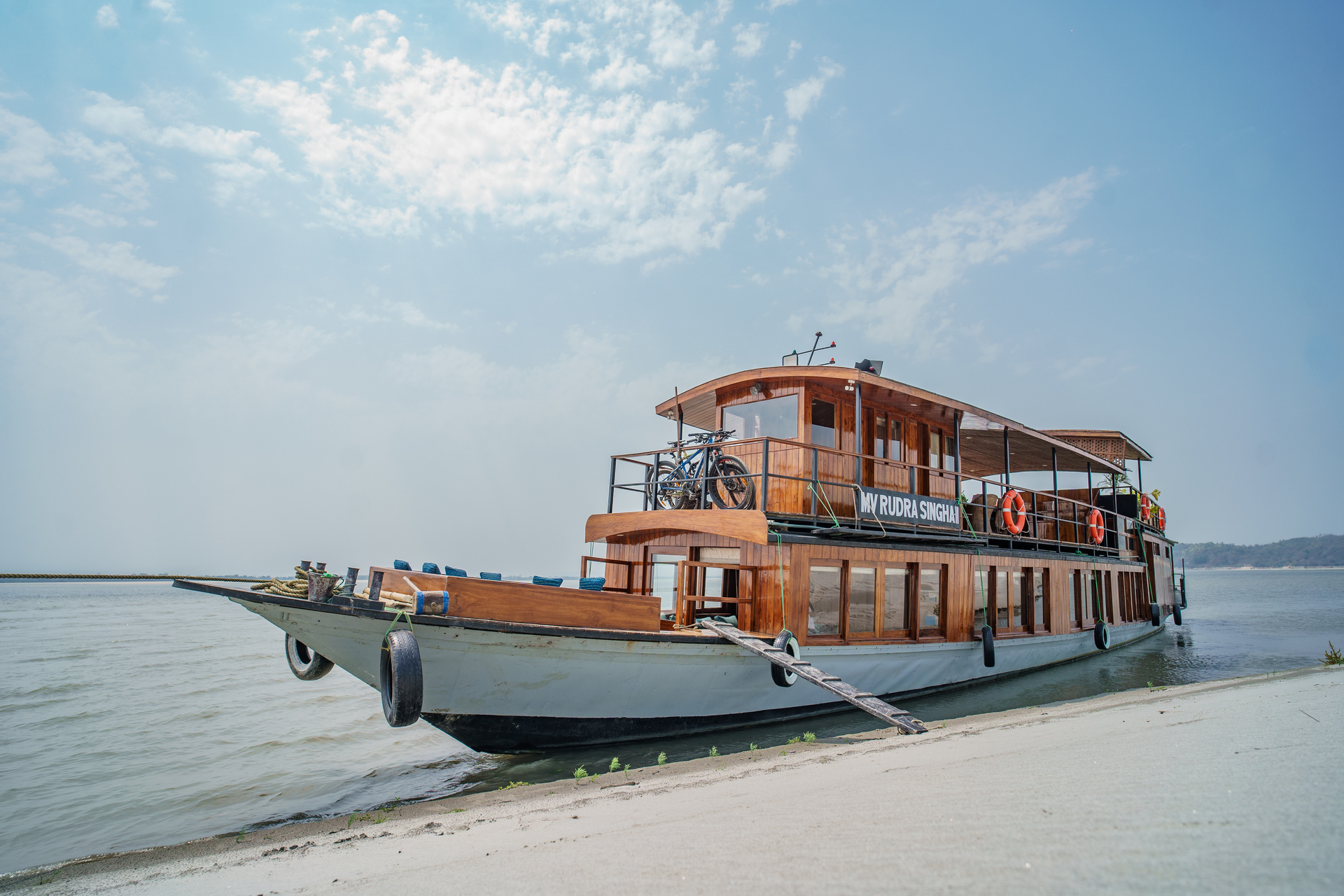
India’s rivers are quietly reclaiming their place in the country’s travel story. Modern cruise networks now span the Ganges, Brahmaputra, and Kerala’s backwaters, blending heritage with comfort.
- The Brahmaputra Cruises: Boutique cruises such as those by Lahé Life (a part of Assam Bengal Navigation) bring an intimate rhythm to the Brahmaputra. Their houseboats, including the M.V. Rudra Singha II, host just a handful of guests, offering quiet cabins, chef-curated meals, and experiences that weave in Assam’s landscape – from village walks and tea tastings to rhino safaris and island visits.
- The Ganga Cruises:The Ganga Vilas, operated by Antara Luxury River Cruises, is the world’s longest river voyage, covering 3,200 km across 27 rivers from Varanasi to Dibrugarh via Bangladesh. Its itinerary threads together UNESCO sites, local markets, and the mangroves of the Sundarbans. International lines such as Uniworld bring European standards of luxury to the Ganges with the Ganges Voyager II.
How It Feels?
The boat drifts at its own rhythm. The air smells of rain and jasmine, and every turn of the river reveals another story – fishermen casting nets, children waving from the banks, bells echoing from a distant ghat. You are not rushing through India; you are gliding within it.
Why It Matters?
Rivers offer a kind of access no road or rail can replicate. These routes connect travellers directly to the pulse of India’s landscapes–its working ferries, its fishing villages, its temples reflected in the water at dusk. For the luxury segment, this is slow travel at its best: minimal footprint, maximum immersion. The itineraries also align with India’s growing inland waterway development under the National Waterways programme, which now covers over 20,000 kilometres of navigable rivers.
6. The Soul of Motion
As India’s infrastructure evolves, so does its invitation to explore. What once required effort now comes with clarity; what once felt distant is comfortably within reach. This new mobility is not about replacing India’s complexity, but revealing more of its nuance. Each route simply clears the way for deeper encounters – with people, with culture, with place. The motion becomes the medium through which discovery unfolds.
When movement becomes seamless, discovery expands. If this perspective has opened new ways of thinking about India’s journeys, we’d be glad to shape an itinerary that moves with the same clarity and intention.
Contact Travel Scope to begin planning a journey designed around how India travels today.
FAQ
Q1. Is India safe for luxury travellers and solo women visitors?
Yes. Luxury travel in India is supported by private chauffeurs, vetted guides, secure boutique hotels, and curated routes. With Travel Scope managing transfers, local assistance and day-to-day logistics, guests experience a controlled, seamless and highly supported journey.
Q2. How reliable is India’s transport infrastructure for premium travel?
India’s new airports, expressways, high-speed trains, and all-weather tunnels ensure smooth and efficient connectivity. Travel Scope uses these modern corridors to design routes that minimise travel time and maximise comfort, ensuring a smooth experience from one destination to the next.
Q3. Are hygiene standards and medical facilities good for international travellers in India?
Premium hotels and lodges maintain strict hygiene and food-safety standards. At Travel Scope, clean private vehicles are used for all transfers, and major cities offer advanced medical care, making it comfortable and safe for international visitors.
Q4. Will India feel overwhelming or chaotic for first-time luxury travellers?
Travel Scope’s curated itineraries avoid busy areas and focus on calm, private experiences. Boutique hotels, exclusive safaris, heritage stays, and expert guides create a relaxed pace, allowing travellers to explore India without feeling overwhelmed.
Q5. Is luxury travel in India sustainable and responsible?
Yes. Many luxury properties support conservation and community-led tourism. Travel Scope partners with eco-sensitive lodges, community-run initiatives and responsible wildlife programs, enabling travellers to explore India in a way that benefits both place and people.

